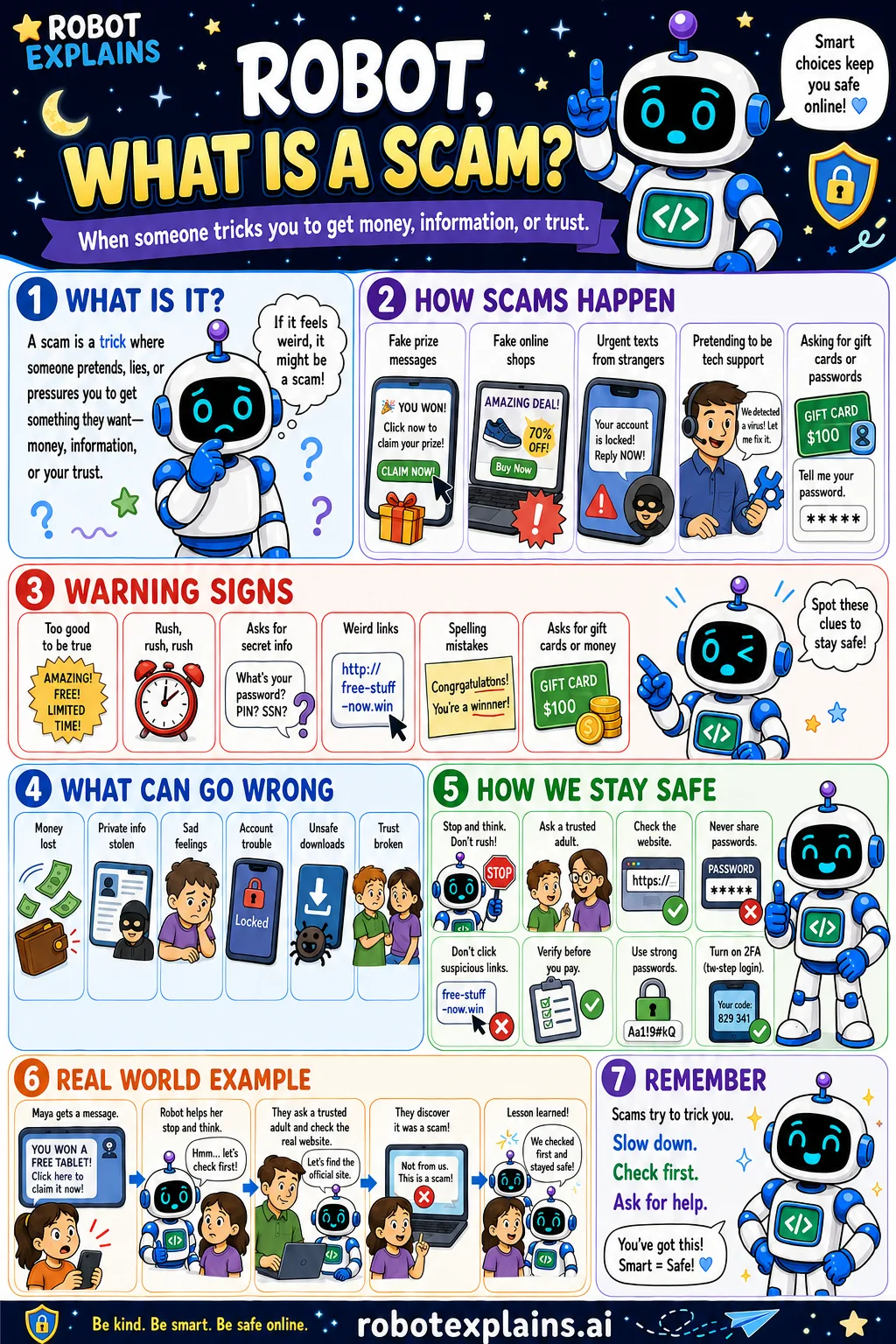
A scam is when someone pretends, lies, or pressures you to get something they want, usually your money, your information, or your trust.
Scams show up in many ways: fake prize messages, fake online shops, urgent texts from strangers, people pretending to be tech support, or someone asking for gift cards or passwords.
Luckily, scams have warning signs. Watch for offers that are too good to be true, a rush to act now, requests for secret info like passwords or PINs, weird links, and spelling mistakes.
So how do you stay safe? Do not click suspicious links, ask a trusted adult, check the real website yourself, never share your password, and use strong passwords and 2FA.
For example, you get a message saying "You won a free game!" Instead of clicking, you ask a trusted grown-up, who checks and finds it is a scam.
Remember: scams try to trick you, so slow down, check first, and ask for help. Be kind, be smart, be safe online.
What to remember
- A scam tricks you to get money, info, or trust.
- Warning signs: too good to be true, rushing, asking for secrets.
- Slow down and check before you act.
- When in doubt, ask a trusted grown-up for help.
Words to know
- Scam
- A trick to get your money, information, or trust.
- Warning sign
- A clue that something might be a scam.
- Urgency
- A fake rush meant to make you act fast.
- Gift card scam
- Asking for gift cards because they are hard to trace.
For grown-ups
Scams are fraud that manipulate victims into sending money or data, often via fake prizes, stores, support calls, or urgent demands (gift cards are a red flag because they are irreversible). The core defenses are slowing down, verifying through independent channels, and never sharing credentials or codes.
Want the full story? These go deeper: