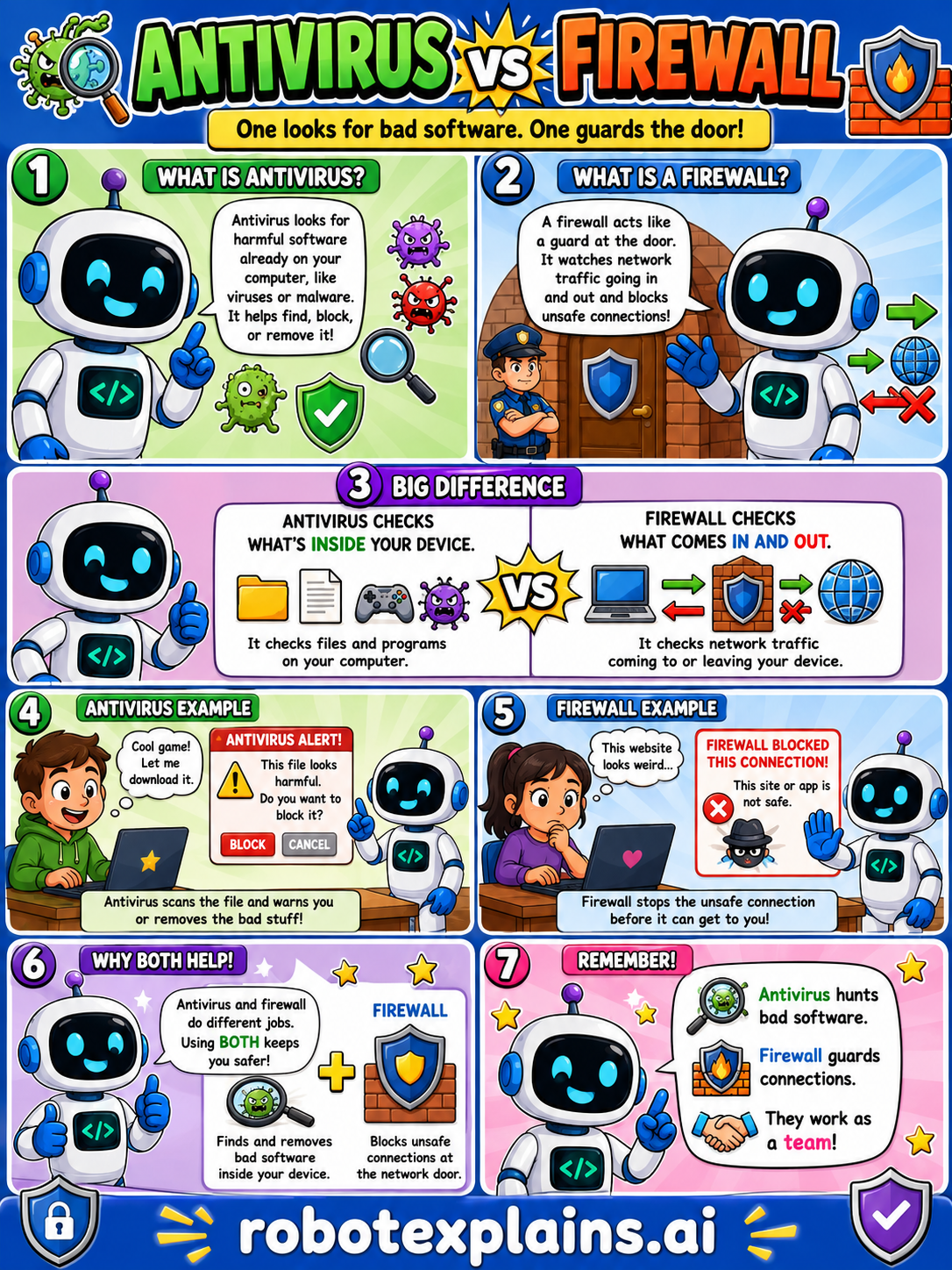
Antivirus and a firewall both protect your device, but they do different jobs. One looks for bad software; one guards the door!
What is antivirus? Antivirus looks for harmful software already on your computer, like viruses or malware. It helps find, block, or remove it.
What is a firewall? A firewall acts like a guard at the door. It watches network traffic going in and out, and blocks unsafe connections.
The big difference. Antivirus checks what's inside your device, your files and programs. A firewall checks what comes in and out, the network traffic coming to or leaving your device.
Antivirus example. You go to download a game. Antivirus scans the file and warns: "This file looks harmful, do you want to block it?"
Firewall example. A website looks weird. The firewall stops the unsafe connection before it can get to you.
Why both help. Antivirus and firewall do different jobs, so using both keeps you safer. Antivirus finds and removes bad software inside; the firewall blocks unsafe connections on the network.
Remember: antivirus hunts bad software, a firewall guards connections, and they work as a team!
What to remember
- Antivirus hunts bad software on your device.
- A firewall guards the connections in and out.
- Antivirus checks what's inside; a firewall checks what comes in and out.
- They work best as a team.
Words to know
For grown-ups
Complementary defenses. Antivirus (anti-malware) scans files and programs already on the device, detecting, blocking, and removing malicious software. A firewall controls network traffic, deciding what's allowed in and out and blocking unsafe connections before they reach you. One looks inward at content; the other looks at the doorway. Real protection uses both, plus updates and good habits — defense in depth, not a single product.
Want the full story? These go deeper: