Friend requests can be great for people you know, but accepting one from a stranger can let them learn too much about you.
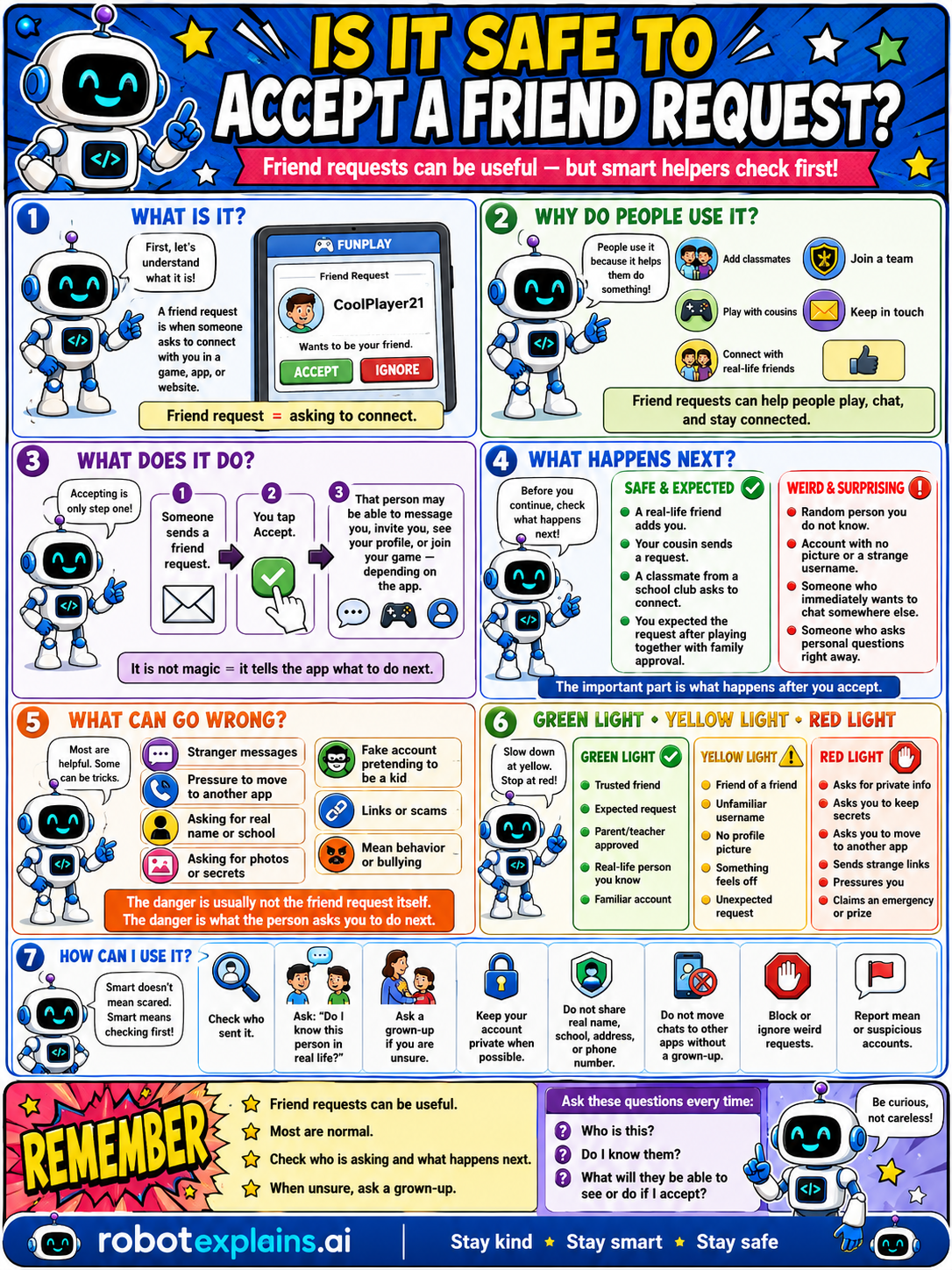
What is it? A friend request is when someone asks to connect with you in a game, app, or website. A friend request = asking to connect.
Why do people use it? People ask because it helps them do something, like add classmates, join a team, play with cousins, or keep in touch. Friend requests can help people play, chat, and stay connected.
What does it do? Accepting is only one step. Someone sends a friend request, you tap Accept, and that person may see your profile or join your game, depending on the app. It is not magic, it tells the app what to do next.
What happens next? Before you continue, check what happens next. A real-life friend adds you, your cousin sends a request, or a classmate from a school club asks to connect, that's safe and expected. A random person you do not know, an account with no picture or a strange name, or someone who immediately wants to chat somewhere else, that's a weird, surprising red flag.
What can go wrong? Most are helpful, but some can be tricks: strange messages, pressure to move to another app, asking for your real name or school, asking for photos or secrets, or mean behavior or bullying. The danger is usually not the friend request itself, it's what the person asks you to do next.
Green light, yellow light, red light. A quick way to decide:
- 🟢 Green: a trusted friend, an expected friend, a parent's or teacher's pick, a familiar account.
- 🟡 Yellow: a friend of a friend, an unfamiliar username, no profile picture, or something that feels off — slow down.
- 🔴 Red: a request from someone you don't know, asks you to keep secrets, asks you to move to another app, sends strange links, or pressures you — stop and ask a grown-up.
How can I use it safely? Check who is really asking. Look before you accept. Don't share your real name or private info with someone new. Don't move to another app just because someone asks. Watch for anything weird or surprising. When unsure, ask a grown-up. Block or ignore requests you don't trust, and report mean or suspicious accounts.
Remember: friend requests can be useful, most are normal, but always check who is asking and what happens next. When unsure, ask a grown-up. Be kind, be smart, be safe.
What changed?
Every tap changes something. The trick isn't fear — it's noticing. After you say “yes,” ask: what just changed?
- Accepted the requestthey can message you and see when you're online
- Accepted a strangersomeone you don't know is now on your friends list
- Let them see your profilethey can look at your photos and posts
What to remember
- Friend requests can be useful, and most are fine.
- Check who is asking and what happens next.
- Don't accept requests from strangers.
- When unsure, ask a grown-up.
Words to know
- Friend request
- An ask to connect with someone online.
- Accept
- Saying yes to a request to connect.
- Stranger
- Someone you don't know in real life.
- Red flag
- A warning sign something might be unsafe.
For grown-ups
Friend/follow requests grant someone a closer view of your profile, posts, and contact. Accepting people you actually know is normal; accepting strangers exposes personal details and opens a contact channel that can be misused. The habit: verify it's someone you know in real life, and ask a grown-up about anyone you don't. Teaches identity judgment, not how predators operate.
Want the full story? These go deeper: