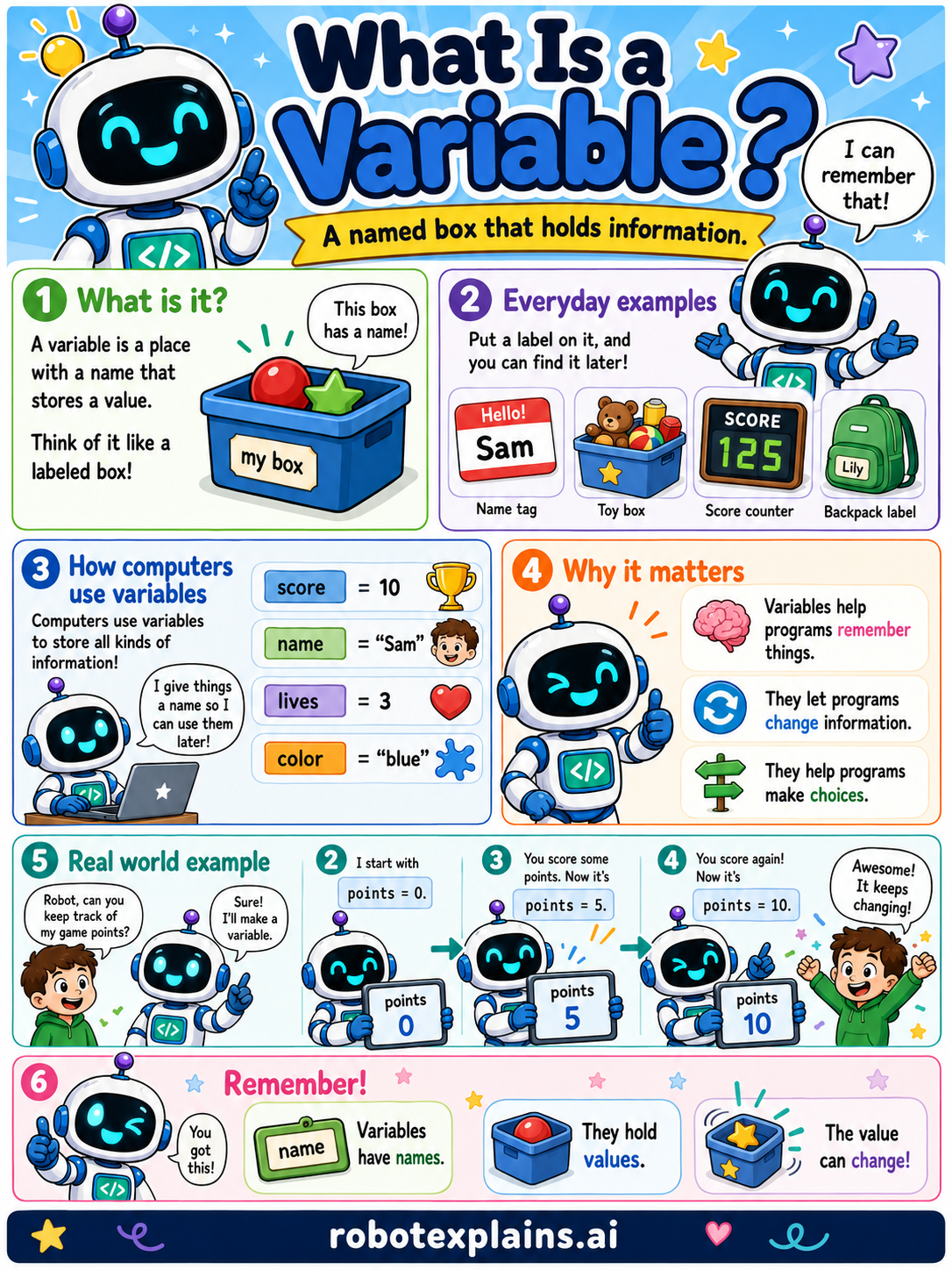
A variable is a place with a name that stores a value. Think of it like a labeled box: this box has a name, and you can find what is inside it later.
You see the same idea in real life: a name tag, a labeled toy box, a score counter, or a backpack with a name on it. Put a label on something, and you can find it again.
Computers use variables to store all kinds of information. For example, score = 10, name = "Sam", lives = 3, or color = "blue". Giving each one a name means the program can use it later.
Why do they matter? Variables help programs remember things, change them, and make choices.
Here is a real example. In a game, your points start at 0. You score, and now it is 5. You score again, and now it is 10. The points are a variable, and its value keeps changing.
Remember: variables have names, they hold values, and the value can change.
What to remember
- A variable is a named box that stores a value.
- The name lets a program find it again later.
- The value inside can change as the program runs.
- Variables help programs remember things.
Words to know
- Variable
- A named place that stores a value.
- Value
- The information stored inside.
- Name
- The label used to find the variable.
- Assign
- To put a value into a variable.
For grown-ups
A variable is a named binding to a value in memory that a program reads and updates as it runs. It is one of the first building blocks of coding, names, values, and change, and pairs naturally with algorithms: the algorithm is the steps, the variables hold the state those steps work on.
Want the full story? These go deeper: