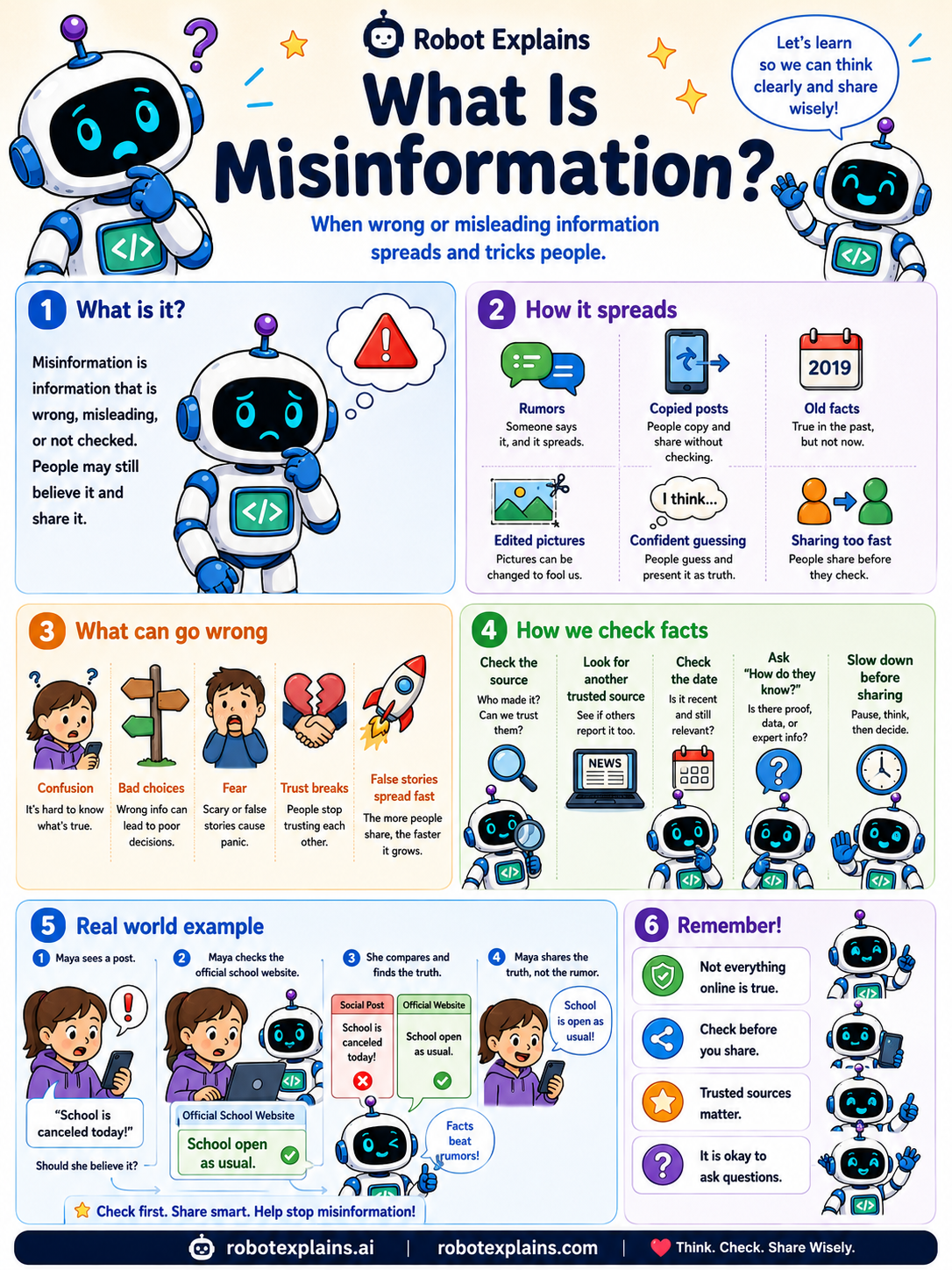
Misinformation is information that is wrong, misleading, or not checked. People may still believe it and share it.
It spreads in lots of ways: rumors (someone says it and it spreads), copied posts shared without checking, old facts that were true in the past but not now, edited pictures, confident guessing presented as truth, and sharing too fast before anyone checks.
What can go wrong? Confusion about what is true, bad choices, fear or panic, broken trust, and false stories spreading fast. The more people trust it, the more it grows.
So we check the facts: check the source (who made it, and can we trust them?), look for another trusted source, check the date (is it recent and still true?), ask "how do they know?", and slow down before sharing.
Here is a real example. Someone posts "School is canceled today!" You check the official school website, and it says school is open as usual. So you do not share the false rumor.
Remember: not everything online is true, check before you share, trusted sources matter, and it is always okay to ask questions. Think, check, share wisely.
What to remember
- Misinformation is wrong or misleading info that spreads.
- It spreads through rumors, old facts, and sharing too fast.
- Check the source and the date before you believe it.
- Think, check, then share wisely.
Words to know
- Misinformation
- Wrong or misleading information that spreads.
- Source
- Where a claim comes from; check if it is trusted.
- Fact-check
- Confirming something is true before sharing.
- Rumor
- An unchecked claim passed person to person.
For grown-ups
Misinformation is false or misleading content spread without intent to deceive (disinformation is the deliberate version). It thrives on speed, emotion, and repetition. Defenses mirror fact-checking: trace the source, corroborate, check recency, and slow down before resharing. It also maps to 'Misinformation' in the OWASP LLM Top 10 when models produce it.
Want the full story? These go deeper: