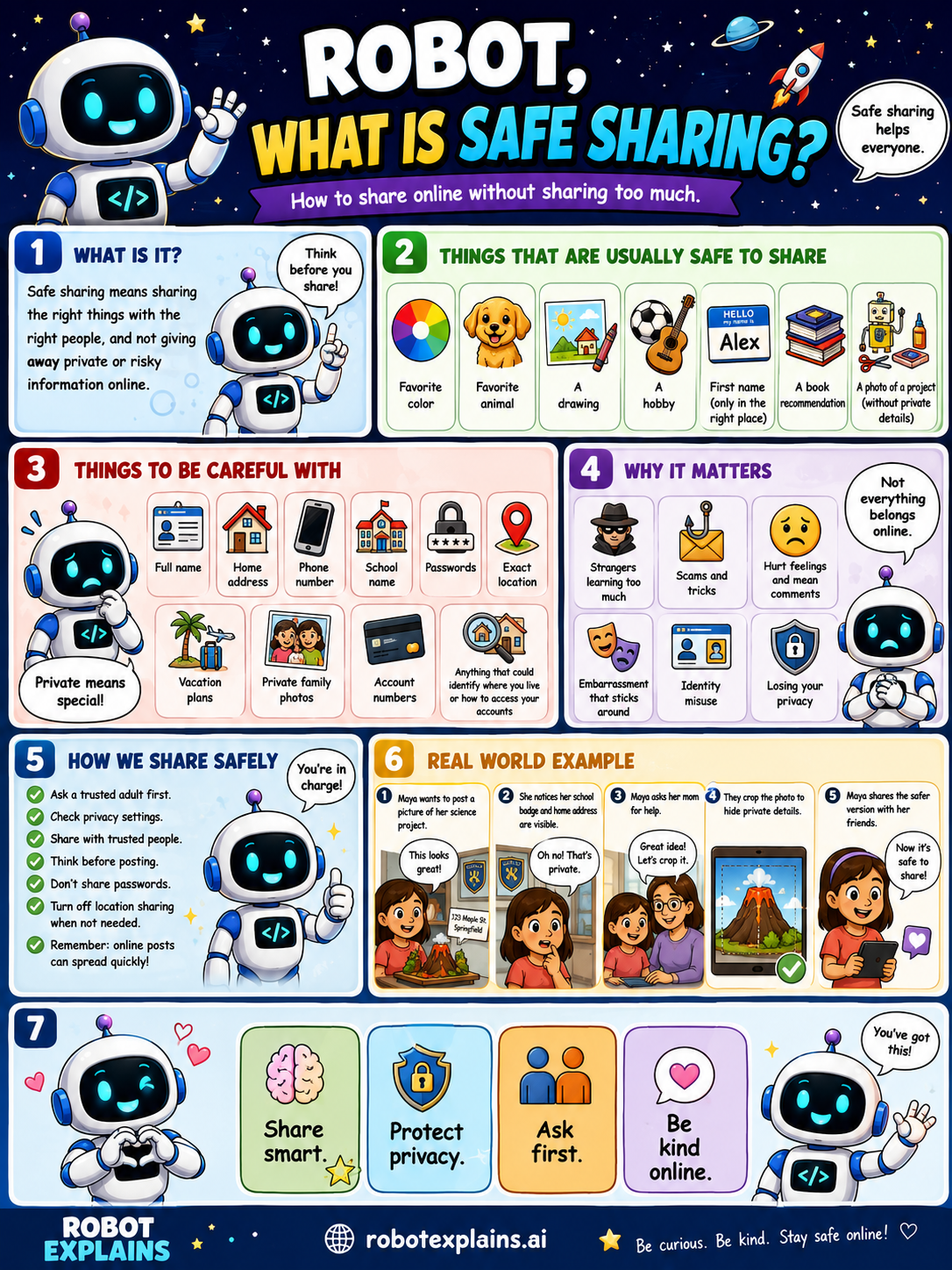
Safe sharing means sharing the right things with the right people, and not giving away private or risky information online.
Some things are usually safe to share: your favorite color, favorite animal, a drawing, a hobby, your first name (only in the right place), a book recommendation, or a photo of a project without private details.
Other things you should be careful with: your full name, home address, phone number, school name, passwords, exact location, private family photos, and account numbers. Private means special, anything that could identify you or how to find you.
Why does it matter? Sharing too much can let strangers learn too much, open the door to scams and tricks, lead to hurt feelings or mean comments, cause embarrassment that sticks around, risk identity misuse, and chip away at your privacy.
So we share safely: ask a trusted adult first, check your privacy settings, share with trusted people, think before posting, never share passwords, turn off location sharing when you can, and remember that online posts can spread quickly.
Here is a real example. Maya wants to post a picture of her science project. She asks a trusted grown-up, checks that it is private, and shares only the version with no name on it. Now it is safe to share.
Remember: share smart, protect your privacy, ask first, and be kind online.
What to remember
- Safe sharing means sharing without sharing too much.
- Some things, like passwords and your address, stay private.
- Check privacy settings and ask a trusted adult first.
- Online posts can spread quickly, so think before you post.
Words to know
- Safe sharing
- Sharing the right things with the right people.
- Private
- Information that is just for you and trusted people.
- Privacy settings
- Controls for who can see what you share.
- Think before you post
- Pausing to ask if something is safe to share.
For grown-ups
Safe sharing is age-appropriate digital citizenship: share interests and creations freely, but treat identifiers (full name, address, school, exact location, account info) as private. The habits, check privacy settings, share with known people, pause before posting, remember posts persist, build a healthy lifelong relationship with online sharing.
Want the full story? These go deeper: