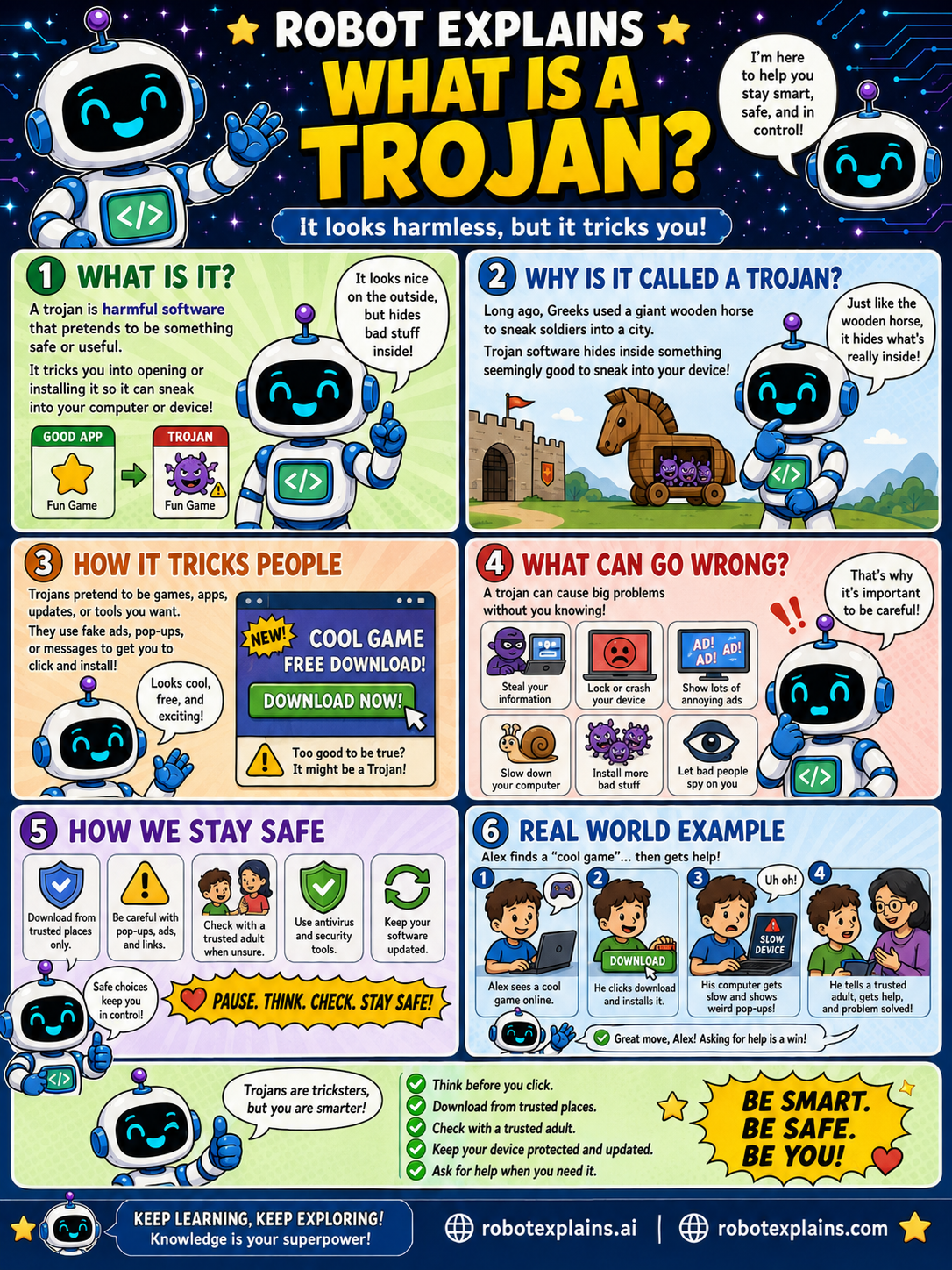
A trojan is harmful software that pretends to be something safe or useful. It tricks you into opening or installing it, then sneaks harmful stuff onto your computer or device. It looks nice on the outside, but hides bad stuff inside.
Why is it called a trojan? Long ago, the Greeks used a giant wooden horse to sneak soldiers into a city. Trojan software hides something seemingly good to sneak into your device, just like the wooden horse, it hides what's really inside.
How does it trick people? Trojans pretend to be games, apps, updates, or tools you want. They use fake ads, pop-ups, or messages to get you to click and install. "Cool game, free download!" If it looks free and exciting and seems too good to be true, it might be a trojan.
What can go wrong? A trojan can cause big problems without you knowing: steal your information, lock or crash your computer, add lots of annoying ads, slow things down, install more bad software, or let bad people spy on you. That's why it's important to be careful!
How do we stay safe? Download from trusted places only, be careful with pop-ups and ads, check with a trusted adult, use antivirus and security tools, and keep your software updated. Safe choices keep you in control. Pause, think, check, stay safe!
Here is a real example. Alex finds a "cool game" online and clicks download. His device gets slow and shows weird stuff, so he tells a trusted adult, gets help, and the problem is solved. Great move, Alex, asking for help is a win!
Remember: trojans are tricksters, but you are smarter. Think before you click, download from trusted places, check with a trusted adult, keep your device protected and updated, and ask for help when you need it. Be smart, be safe, be you!
What to remember
- A trojan pretends to be something safe to trick you.
- It's named after the Greek wooden-horse trick.
- It can steal info, add ads, or install more bad software.
- Download from trusted places, and pause when it's too good to be true.
Words to know
For grown-ups
A trojan (Trojan horse) is malware disguised as legitimate, desirable software to trick users into installing it; once run, it can steal data, open backdoors, or download more malware. Unlike viruses and worms it doesn't self-replicate, it relies on deception. Defenses: install only from trusted sources, scrutinize pop-ups and ads, antivirus, and updates.
Want the full story? These go deeper: