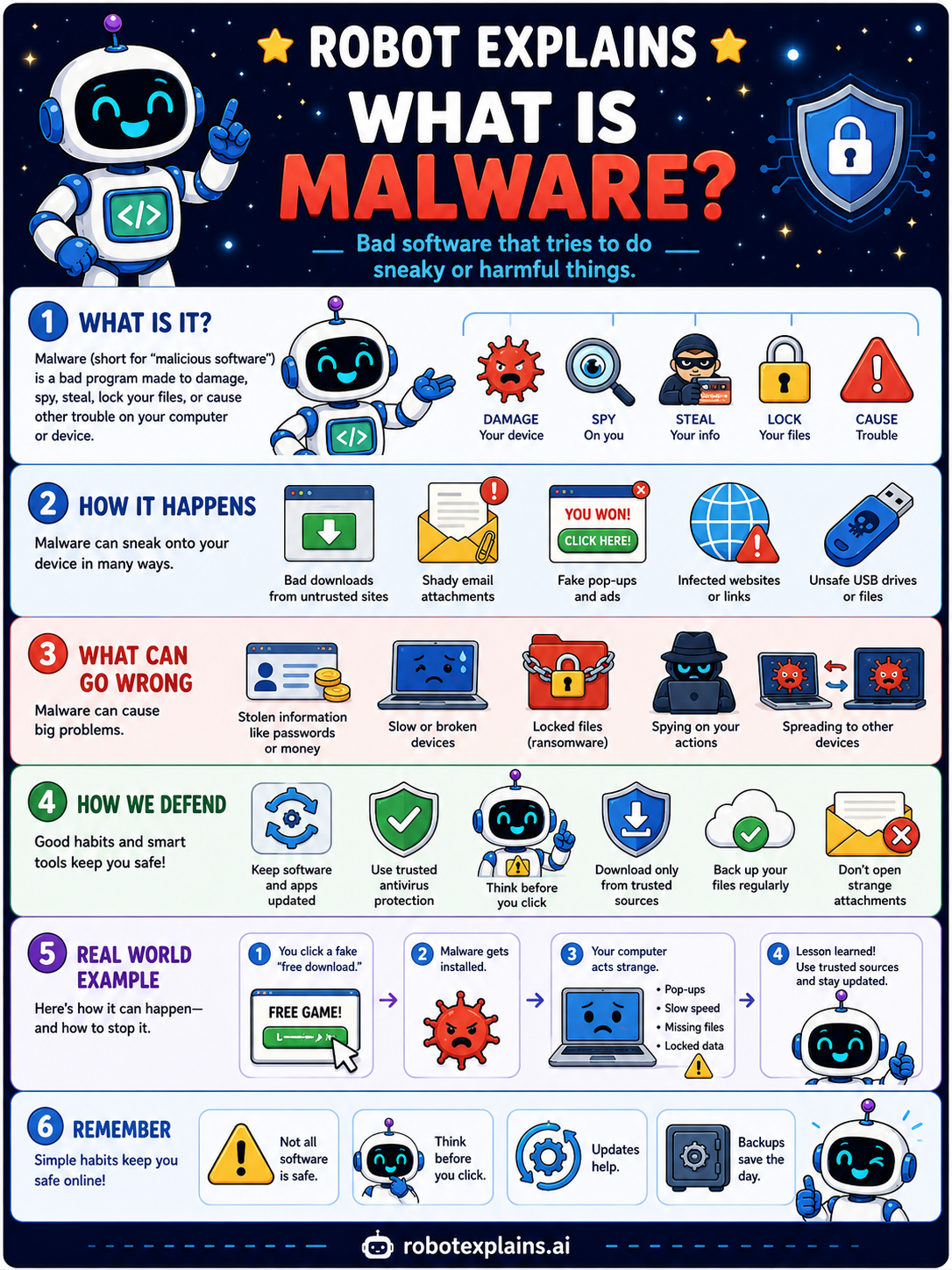
Malware is short for malicious software. It is any program made to do something bad to your computer or device.
Malware can cause real trouble: it might spy on you, steal your information, lock your files and demand money (that is called ransomware), or just break things.
It usually sneaks in the same few ways: bad downloads, shady email attachments, fake "you won!" pop-ups, infected websites, and unsafe USB drives.
Once inside, it can slow your device, break things, steal passwords, watch what you do, and even spread to other devices.
Good habits keep it out. Keep your software and apps updated. Use antivirus protection. Think before you click. Only download from trusted places. And back up your files, so you are safe even if something goes wrong.
The simplest rule of all: if something looks strange, stop and think before you click.
What to remember
- Malware is bad software made to harm or spy.
- It sneaks in through downloads, attachments, and fake pop-ups.
- Updates and antivirus help keep it out.
- Backups save the day if something goes wrong.
Words to know
- Malware
- Harmful software. Short for malicious software.
- Ransomware
- Malware that locks your files and demands money.
- Antivirus
- A program that finds and removes malware.
- Backup
- A spare copy of your files, kept safe somewhere else.
For grown-ups
Malware spans viruses, worms, trojans, spyware, and ransomware, delivered via downloads, attachments, malicious sites, and removable media. Layered defenses work best: timely patching, reputable endpoint protection, least privilege, cautious link and attachment habits, and tested offline backups so ransomware cannot force a payment.
Want the full story? These go deeper: