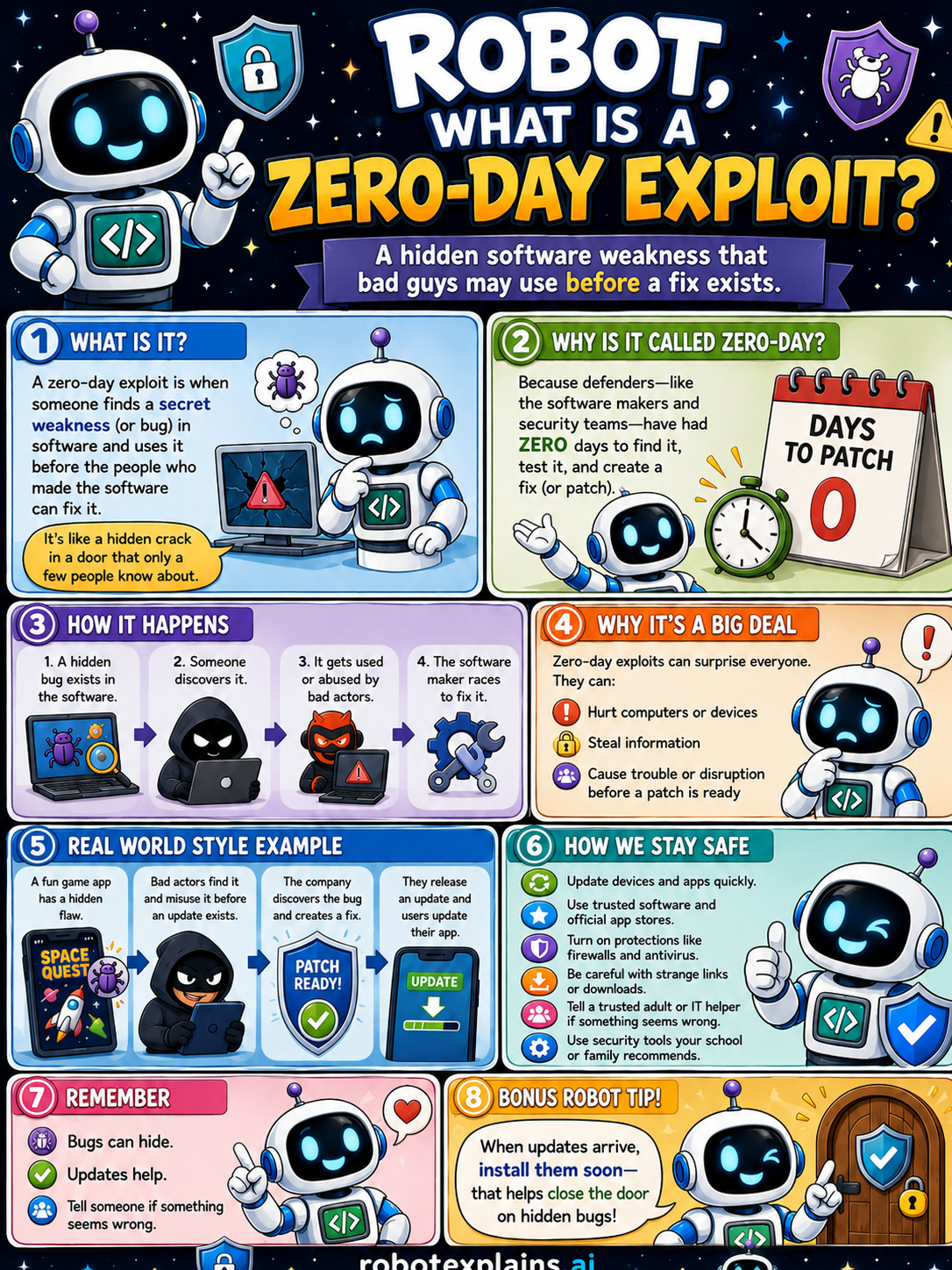
A zero-day exploit is when someone finds a secret weakness (or bug) in software and uses it before the people who made it can fix it. It is like a hidden crack in a door that only a few people know about.
Why is it called zero-day? Because the defenders, the software makers and security teams, have had zero days to find it, test it, and create a fix (or patch).
How does it happen? A bug exists in the software, someone discovers it, it gets used or abused by bad actors, and the software maker races to make a fix.
Why is it a big deal? Zero-day exploits surprise everyone. They can hurt computers and devices, steal information, and cause trouble or disruption before a patch is ready.
How do we stay safe? Update devices and apps quickly, use trusted software and official app stores, turn on protections like firewalls and antivirus, be careful with strange links or downloads, tell a trusted adult or IT helper if something seems wrong, and use security tools your school or family recommends.
Bonus robot tip: when updates arrive, install them soon. That helps close the door on hidden bugs.
Remember: bugs can hide, updates help, and tell someone if something seems wrong.
What to remember
- A zero-day is a secret weakness used before a fix exists.
- Defenders have had zero days to fix it.
- Updating quickly helps close the door.
- Tell someone if something seems wrong.
Words to know
- Zero-day
- A weakness used before a fix is ready.
- Exploit
- Using a weakness to cause harm.
- Patch
- The fix that closes the weakness.
- Defender
- The people who protect and fix software.
For grown-ups
A zero-day is a vulnerability unknown to the vendor (or unpatched) that attackers exploit before a fix exists, so defenders have had 'zero days' to respond. They are prized and dangerous. Defenses are layered: fast patching once fixes ship, defense-in-depth, least privilege, and monitoring to limit impact.
Want the full story? These go deeper: