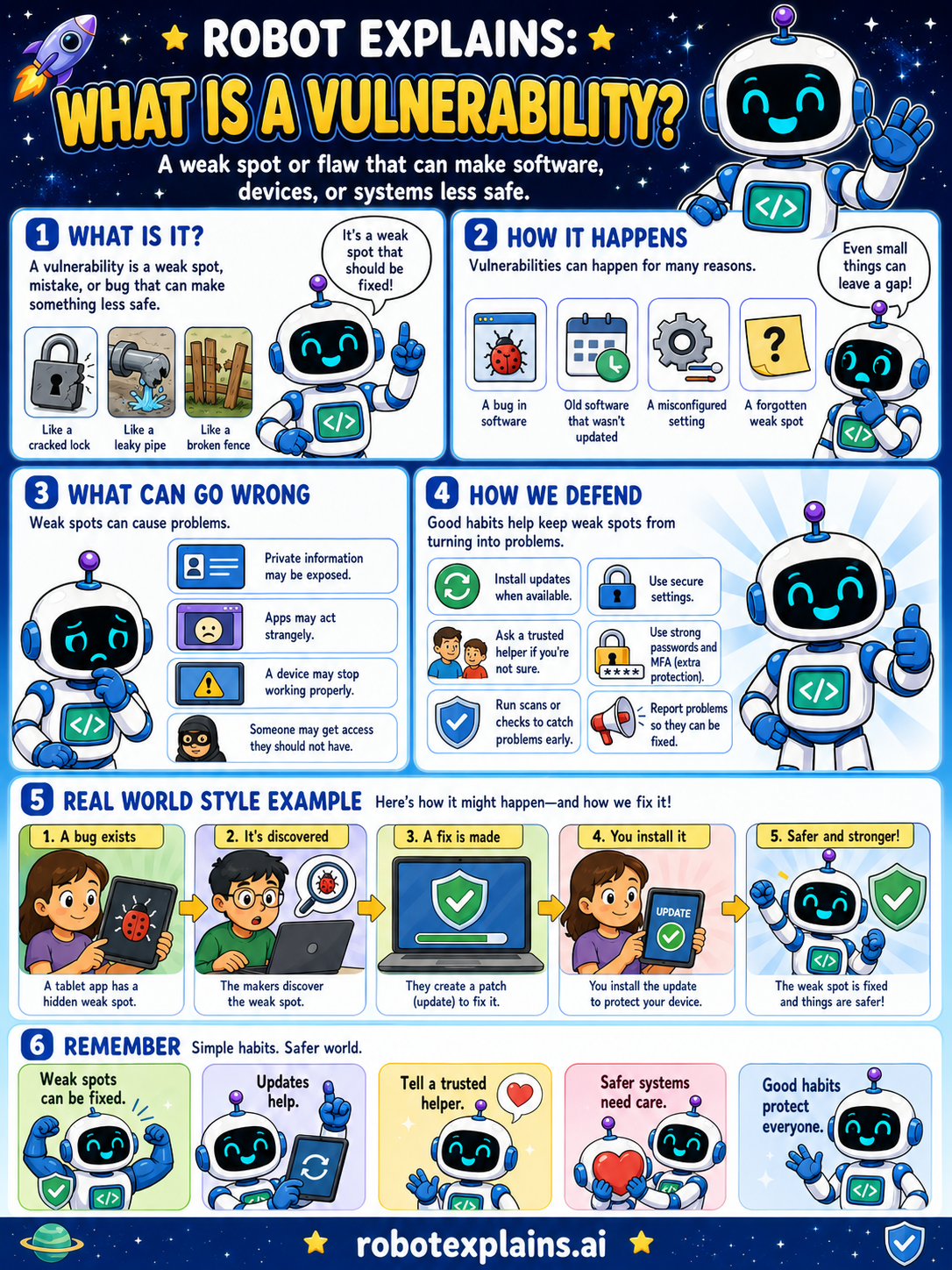
A vulnerability is a weak spot, mistake, or bug that can make software, devices, or systems less safe. It is a weak spot that should be fixed, like a cracked lock, a leaky pipe, or a broken fence.
How do vulnerabilities happen? From a bug in the code, old software that was not updated, a setting that was misconfigured, or a forgotten weak spot. Even small things can leave a gap.
What can go wrong? Private information might be exposed, apps might act strangely, a device might stop working properly, or someone might get access they should not have.
How do we defend against them? Install updates when they are available, use secure settings, ask a trusted grown-up if you are not sure, run scans or checks to catch problems early, and report problems so they can be fixed.
Here is how it usually goes. A bug exists, the makers discover it, they create a fix (a patch), you install the update, and the weak spot is fixed, safer and stronger.
Remember: weak spots can be fixed, updates help, and safer systems need care.
What to remember
- A vulnerability is a weak spot in software or a device.
- It comes from bugs, old software, or wrong settings.
- It can let in people who should not have access.
- Updates and fixes (patches) close weak spots.
Words to know
- Vulnerability
- A weak spot or flaw that can be exploited.
- Bug
- A mistake in code that can be a weak spot.
- Patch
- A fix that closes a vulnerability.
- Exploit
- Using a weak spot to cause harm.
For grown-ups
A vulnerability is a flaw, in code, configuration, or design, that can be exploited to compromise confidentiality, integrity, or availability. The lifecycle is discover, patch, deploy. Timely updates, secure defaults, least privilege, and scanning shrink the window of exposure.
Want the full story? These go deeper: