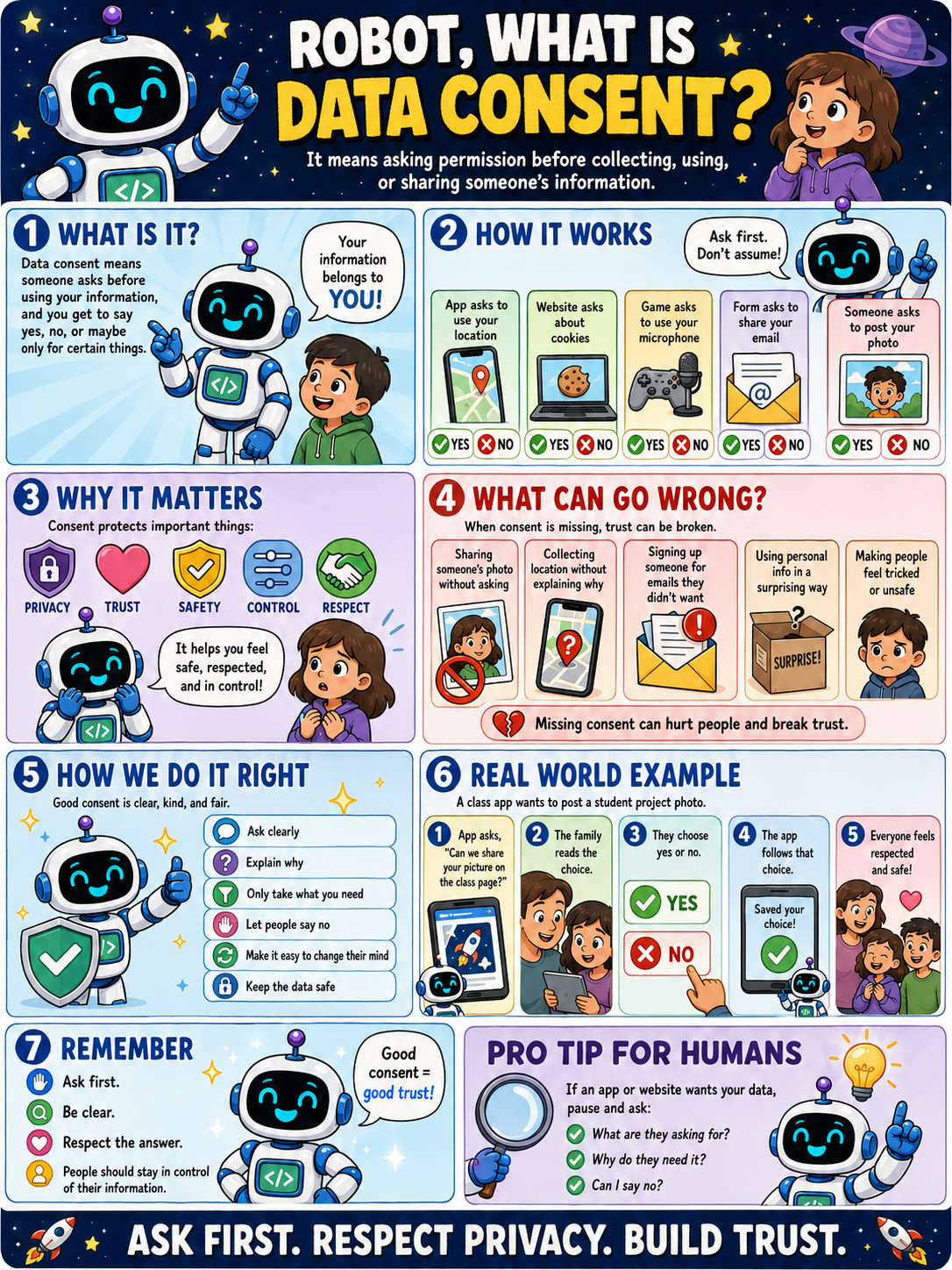
Data consent means asking permission before collecting, using, or sharing someone's information. The big idea: your information belongs to you, and you get to say yes, no, or maybe, only for certain things.
How does it work? An app asks to use your location, a website asks about cookies, a game asks to use your microphone, a form asks to share your email, or someone asks to post your photo. The rule is simple: ask first, don't assume.
Why does it matter? Consent protects important things, privacy, trust, safety, control, and respect. It helps people feel safe, respected, and in control.
What can go wrong when consent is missing? Sharing someone's photo without asking, collecting info without explaining why, signing someone up for emails they didn't want, using personal info in a surprising way, or making people feel tricked or unsafe. Missing consent can hurt people and break trust.
How do we do it right? Ask clearly, explain why, only take what you need, let people say no, make it easy to change their mind, and keep the data safe.
Here is a real example. A class app wants to post student project photos. The app asks, "Can we share your picture on the class page?" The family reads the choice, picks yes or no, and the app follows that choice. Everyone feels respected and safe.
Remember: ask first, be clear, respect the answer, and people should stay in control of their information.
What to remember
- Data consent means asking before using someone's info.
- Your information belongs to you, you can say yes or no.
- Good consent is clear, and you can change your mind.
- Missing consent can break trust.
Words to know
- Consent
- Saying yes (or no) to how your info is used.
- Permission
- Being asked before something happens.
- Privacy
- Keeping your information yours.
- Opt out
- Choosing to say no, or to stop.
For grown-ups
Consent is asking permission before collecting, using, or sharing personal data, ideally informed, specific, and revocable. It underpins privacy law (GDPR, COPPA) and is core to responsible data and AI use. Good practice: ask clearly, explain the purpose, collect only what's needed (data minimization), and make opting out easy.
Want the full story? These go deeper: