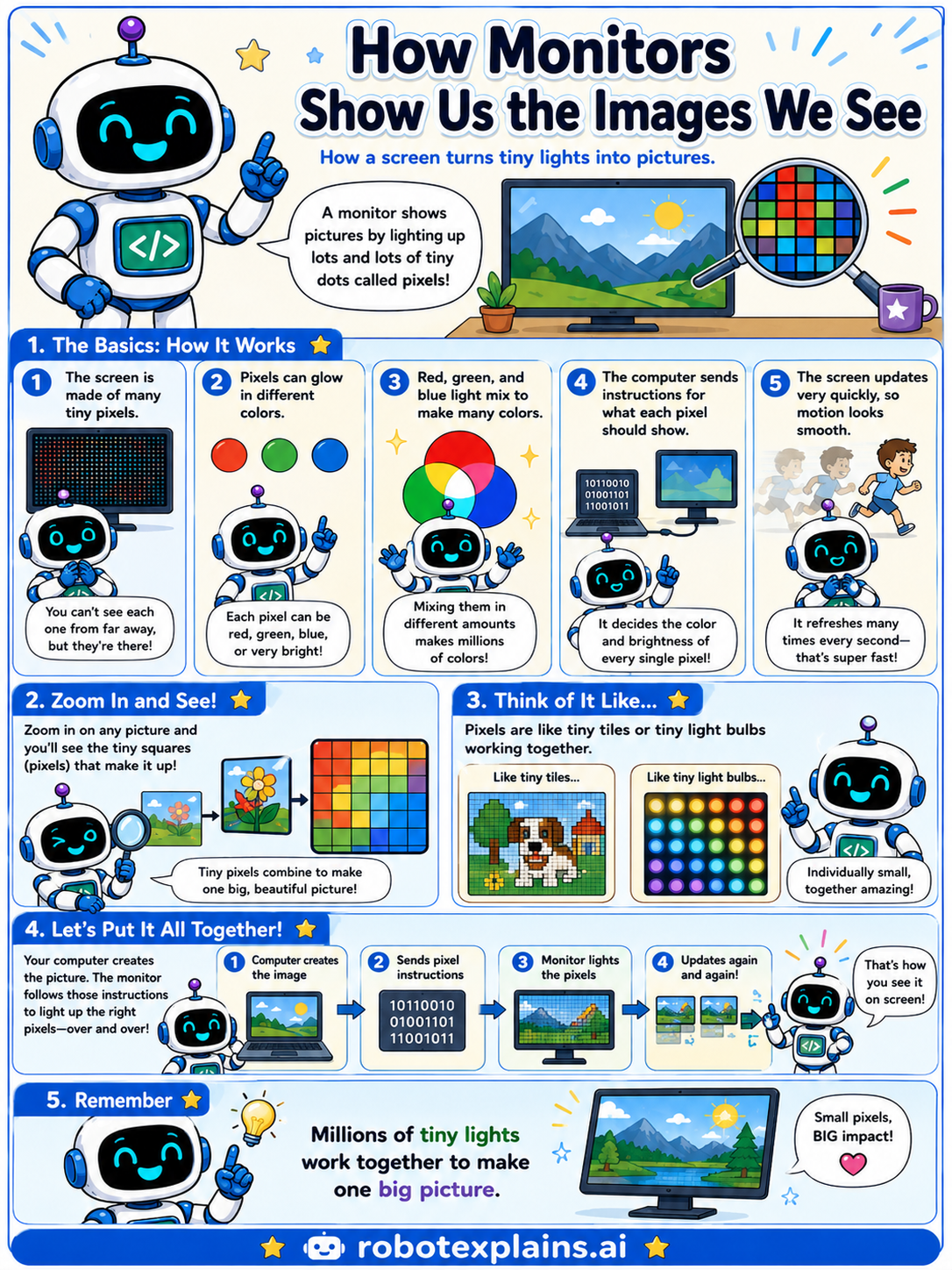
A monitor shows pictures by lighting up lots and lots of tiny dots called pixels.
The basics. The screen is made of millions of tiny pixels. Each pixel can glow in different colors. By mixing red, green, and blue light in different amounts, a pixel can make millions of colors.
The computer is in charge. The computer sends instructions for what each pixel should show. It decides the color and brightness of every single pixel.
Fast updates. The screen updates very quickly, many times every second, so motion looks smooth instead of jumpy.
Zoom in and see. If you could zoom way in on a picture, you'd see the tiny squares (pixels) that make it up. Up close they look like little tiles or tiny light bulbs; together they make one big, beautiful picture.
Remember: a screen is made of millions of tiny pixels, each pixel mixes red, green, and blue light, the computer tells each pixel what to do, and fast updates make motion look smooth. Small pixels, BIG impact!
What to remember
- A screen is made of millions of tiny dots called pixels.
- Each pixel mixes red, green, and blue light to make colors.
- The computer tells each pixel what color to show.
- The screen updates very fast, so motion looks smooth.
Words to know
- Pixel
- One tiny dot of light on a screen.
- Screen
- The display made of many pixels.
- Color mixing
- Combining red, green, and blue light to make colors.
- Refresh
- How the screen updates the picture many times a second.
For grown-ups
A display is a grid of pixels, each made of red, green, and blue subpixels. Varying their brightness produces a wide gamut of colors (additive color mixing). The GPU and display controller send per-pixel color data, and the panel refreshes many times per second (its refresh rate) so motion appears continuous. The big idea for kids: many tiny lights, controlled precisely and updated fast, add up to one big moving picture.
Want the full story? These go deeper: