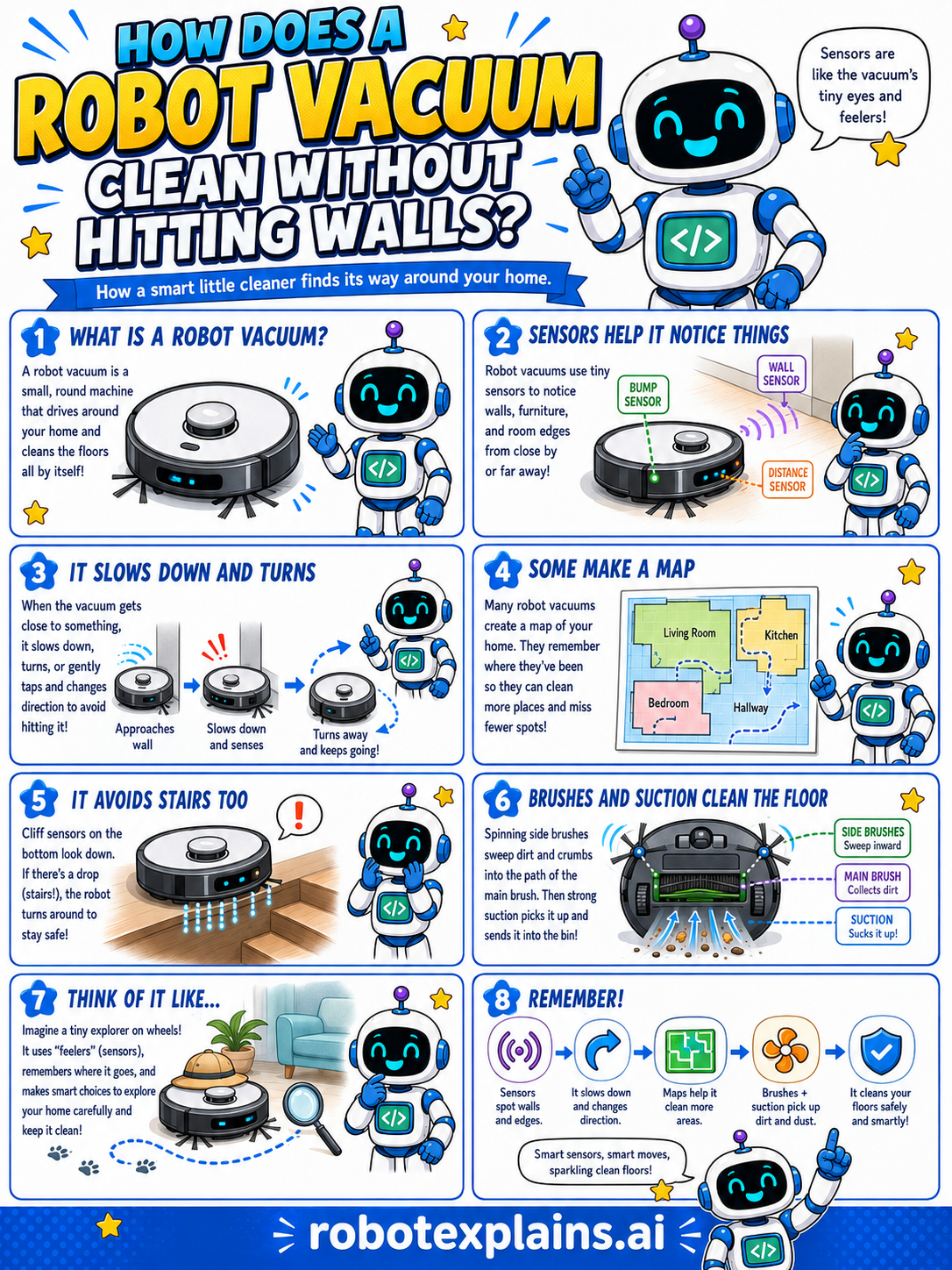
A robot vacuum is a small, round machine that drives around your home and cleans the floors all by itself. How does it avoid bumping into everything?
Sensors help it notice things. Robot vacuums use tiny sensors to notice walls, furniture, and room edges from close by or far away. The sensors are like the vacuum's tiny eyes and feelers.
It slows down and turns. When the vacuum gets close to something, it slows down, turns, or gently taps and changes direction to avoid hitting it.
Some make a map. Many robot vacuums create a map of your home. They remember where they've been so they can clean more places and miss fewer spots.
It avoids stairs too. Cliff sensors on the bottom look down. If there's a drop, like stairs, the robot turns around to stay safe.
Brushes and suction clean the floor. Spinning side brushes sweep dirt and crumbs into the path of the main brush. Then strong suction picks it up and sends it into the bin.
Think of it like a tiny explorer on wheels. It uses feelers (sensors), remembers where it goes, and makes smart choices to explore your home carefully and clean it.
Remember: sensors spot walls and edges, smart moves change direction, maps help it clean more, and brushes plus suction pick up dirt and dust. Smart sensors, smart moves, sparkling clean floors!
What to remember
- A robot vacuum drives and cleans by itself.
- Sensors help it notice walls and furniture.
- Many make a map of your home to clean smartly.
- Cliff sensors keep it from falling down stairs.
Words to know
- Robot vacuum
- A small machine that cleans floors by itself.
- Sensor
- A part that helps the robot notice the world around it.
- Map
- A plan of your home the robot remembers.
- Cliff sensor
- A sensor that spots a drop, like stairs.
For grown-ups
Robotic vacuums combine bump and proximity sensors, often LIDAR or camera-based mapping (SLAM for navigation), and downward 'cliff' sensors to move around obstacles and avoid falling down stairs. Brushes and suction collect debris while software plans efficient coverage and remembers room layouts. It's a tangible, friendly example of sensors plus software adding up to autonomy.
Want the full story? These go deeper: