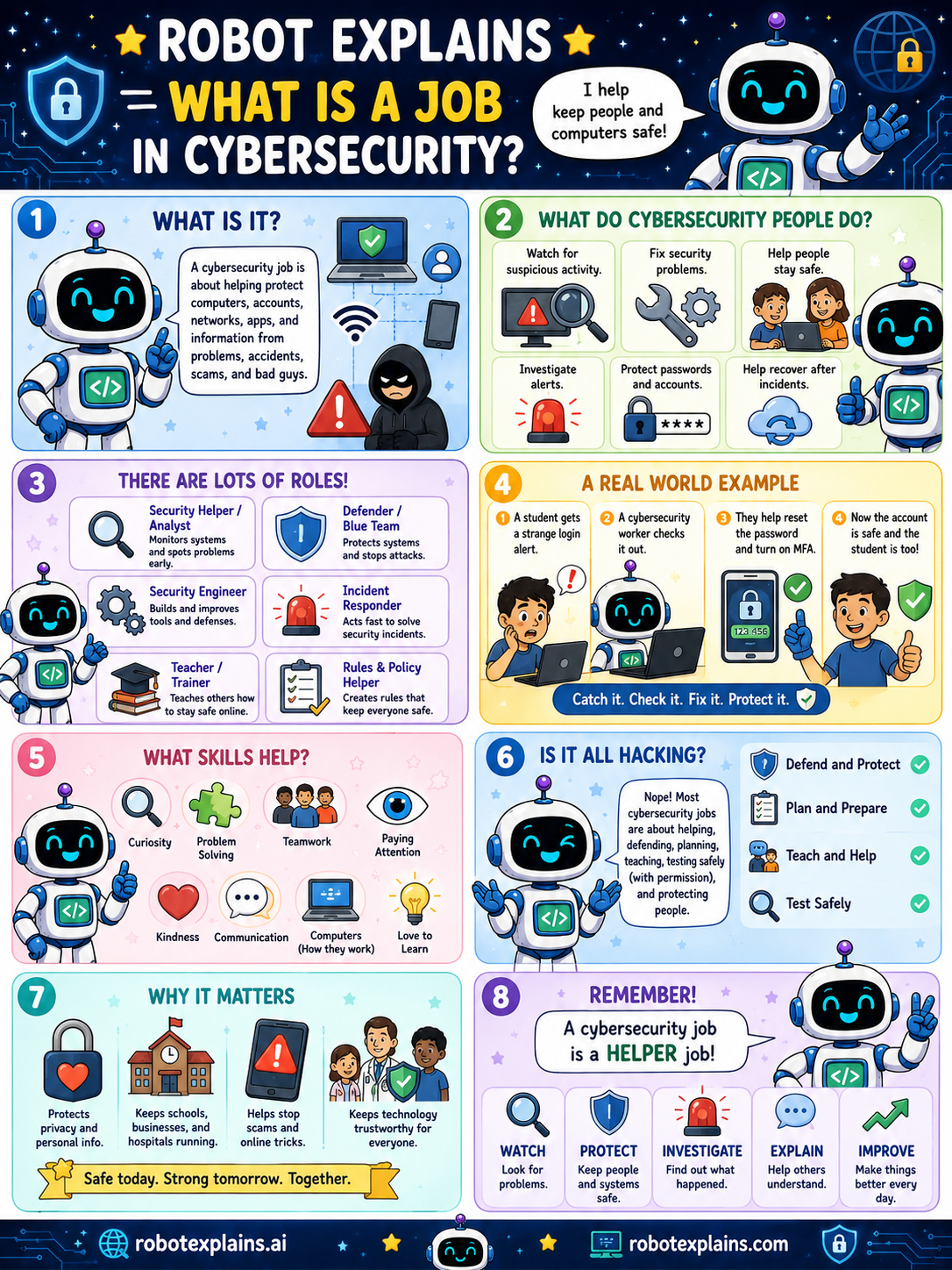
A cybersecurity job is about helping protect computers, accounts, networks, apps, and information from problems, scams, and bad actors. The big idea: "I help keep people and computers safe!"
What do cybersecurity people do? Watch for suspicious activity, fix security problems, help people stay safe, investigate alerts, protect passwords and accounts, and help recover after incidents.
There are lots of roles: a security helper / analyst (monitors systems and spots problems), a defender / blue team (protects systems and stops attacks), a security engineer (builds and improves tools and defenses), an incident responder (acts fast to solve security incidents), a teacher / trainer (teaches others how to stay safe online), and a rules & policy helper (creates rules that keep everyone safe).
Here is a real example. A student gets a strange login alert, a cybersecurity worker checks it out, they help reset the password and turn on MFA, and the account is safe, and so is the student. Catch it, check it, fix it, protect it.
What skills help? Curiosity, problem-solving, teamwork, paying attention, kindness, communication, an interest in how computers work, and a love of learning.
Is it all hacking? Nope! Most cybersecurity jobs are about helping, defending, planning, teaching, testing safely (with permission), and protecting people.
Remember: a cybersecurity job is a helper job, watch for problems, protect people and systems, investigate what happened, explain so others understand, and improve things every day. Safe today, strong tomorrow, together.
What to remember
- A cybersecurity job is a helper job.
- There are many roles, defenders, engineers, responders, trainers.
- It's mostly protecting and helping, not 'hacking.'
- Curiosity, problem-solving, and kindness all help.
Words to know
- Cybersecurity job
- A role that keeps people and computers safe.
- Blue team
- Defenders who protect systems.
- Incident responder
- Someone who acts fast to fix problems.
- Security engineer
- Someone who builds defenses and tools.
For grown-ups
Cybersecurity is a broad field of helper roles, SOC analyst, security engineer, incident responder, GRC/policy, awareness trainer, and more, far beyond 'hacking.' Core aptitudes are curiosity, problem-solving, communication, and attention to detail. It's a growing, high-demand career area welcoming many backgrounds.
Want the full story? These go deeper: