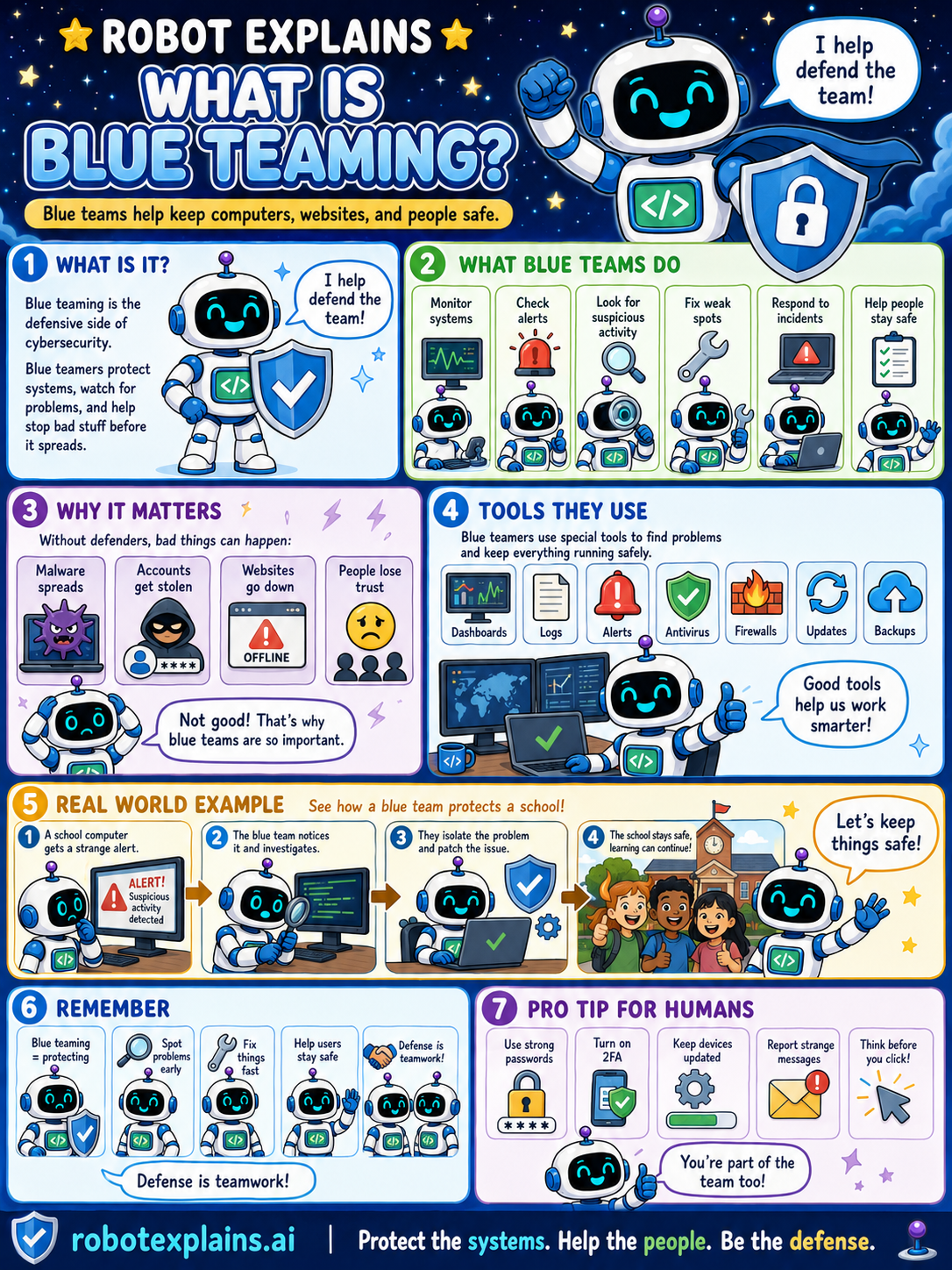
Blue teaming is the defensive side of cybersecurity. Blue teamers protect systems, watch for problems, and stop bad stuff before it spreads. As the robot says: "I help defend the team!"
What do blue teams do? Monitor systems, check alerts, look for suspicious activity, fix weak spots, respond to incidents, and help people stay safe.
Why does it matter? Without defenders, bad things can happen, malware spreads, accounts get stolen, websites go offline, and people lose trust. That is why blue teams are so important.
What tools do they use? Dashboards, logs, alerts, antivirus, firewalls, updates, and backups. Good tools help them work smarter.
Here is a real example. A school computer gets a strange alert. The blue team notices and investigates, finds the problem and patches it, and the school stays safe and keeps learning.
Pro tip for humans: use strong passwords, turn on 2FA, keep devices updated, report strange messages, and think before you click, you are part of the team too.
Remember: blue teaming is protecting, spot problems early, fix things so everyone stays safe, and defense is teamwork.
What to remember
- Blue teams defend computers, websites, and people.
- They monitor, spot problems early, and respond.
- They use dashboards, alerts, firewalls, and backups.
- Defense is teamwork, and you are part of it too.
Words to know
- Blue team
- The defenders who protect systems.
- Monitor
- Watching systems for trouble.
- Incident
- A security problem that needs a response.
- Defense
- Keeping systems and people safe.
For grown-ups
A blue team is the defensive side of security operations: monitoring, detection, incident response, hardening, and recovery, the counterpart to the red team's offense. Tooling spans SIEM/logging, EDR/antivirus, firewalls, patching, and backups. Healthy security pairs both: red finds the gaps, blue closes them.
Want the full story? These go deeper: