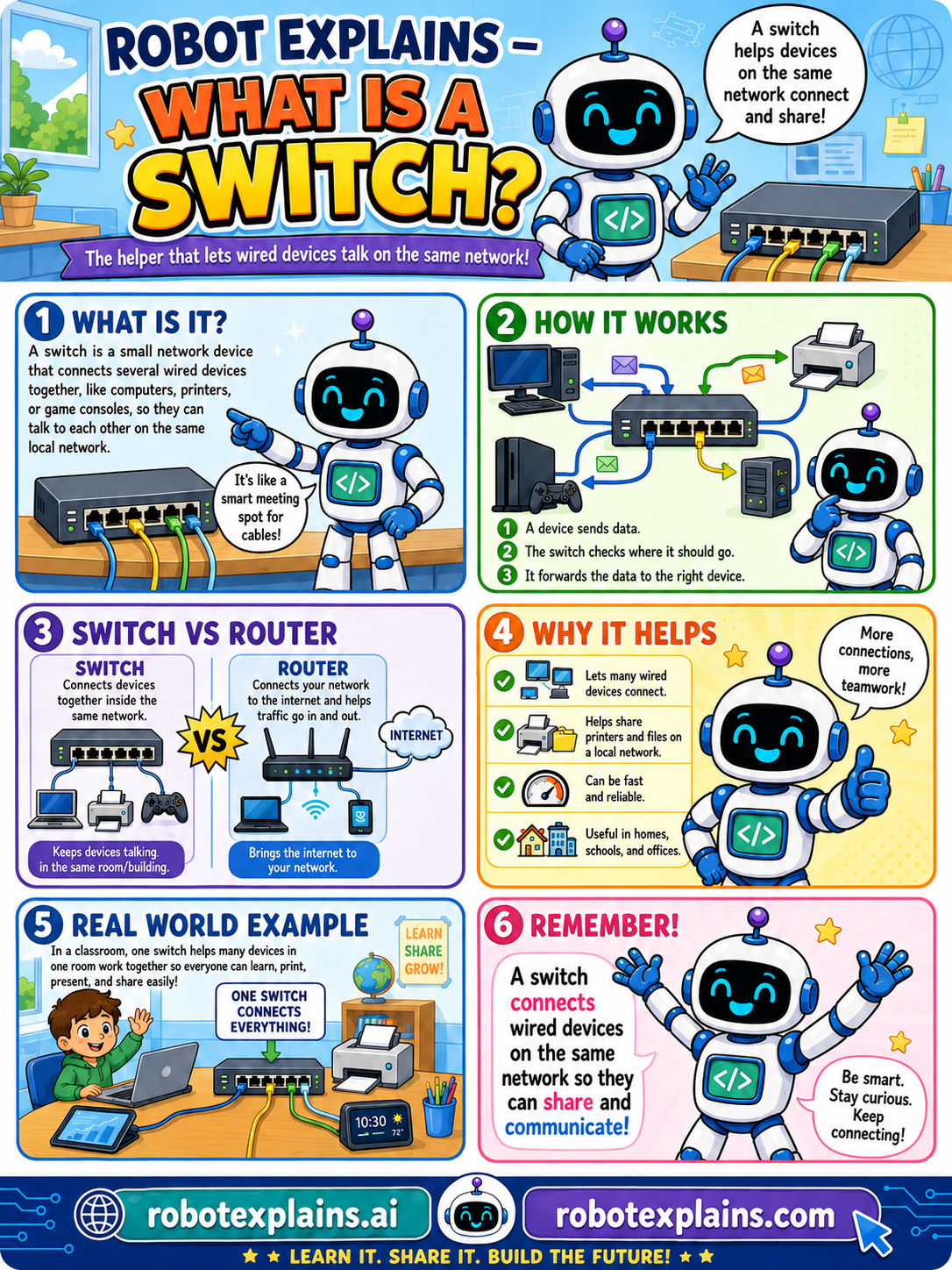
A switch is a small network device that connects several wired devices together, like computers, printers, or game consoles, so they can talk to each other on the same local network. It's like a smart meeting spot for cables!
How does it work? A device sends data, the switch checks where it should go, and it forwards the data to the right device.
Switch vs Router: a switch connects devices together inside the same network, keeping devices talking in the same home or building. A router connects your network to the internet and helps traffic go in and out, bringing the internet to your network.
Why does it help? It lets many wired devices connect, helps share printers and files on a local network, can be fast and reliable, and is useful in homes, schools, and offices. More connections, more teamwork!
Here is a real example. In a classroom, one switch helps many devices in one room work together, so everyone can learn, print, present, and share easily. One switch connects everything!
Remember: a switch connects wired devices on the same network so they can share and communicate.
What to remember
- A switch connects wired devices on the same network.
- It forwards data to the right device.
- A switch links devices; a router links you to the internet.
- It's great for homes, schools, and offices.
Words to know
- Switch
- Connects wired devices on the same network.
- Local network
- Devices connected in one place.
- Forward
- Send data to the right device.
- Router
- Connects your network to the internet.
For grown-ups
A network switch forwards frames between wired devices on the same local network, using MAC addresses to send data only to the intended port. A router, by contrast, connects networks and routes traffic to/from the internet. Switches scale wired connectivity in homes, schools, and offices.
Want the full story? These go deeper: