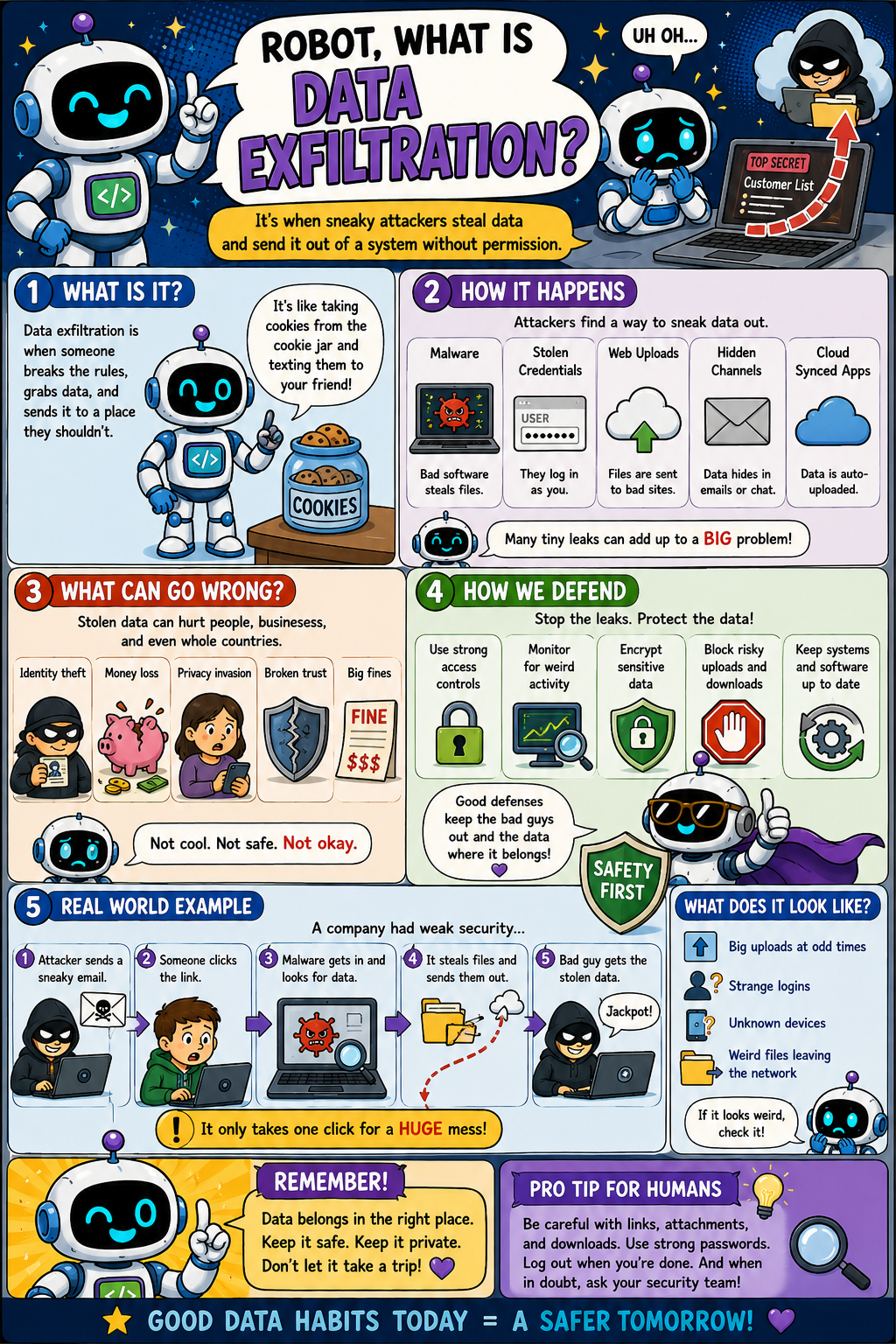
Data exfiltration is when sneaky attackers steal data and send it out of a system without permission. It is like taking the cookies from the cookie jar and texting them to your friend, they break the rules, grab data, and send it where it should not go.
How does it happen? Attackers find a way to sneak data out: with malware (bad software that steals files), stolen credentials (logins), web uploads (sending files to bad sites), hidden channels (data tucked in emails or chat), or cloud-synced apps that auto-upload. Many tiny leaks can add up to a big problem.
What can go wrong? Identity theft, money loss, privacy invasion, broken trust, and even big fines.
How do we defend? Stop the leaks and protect the data: use strong access controls, monitor for weird activity, encrypt sensitive uploads, block risky uploads and downloads, and keep systems updated. Good defenses keep the bad guys out and the data where it belongs.
Here is a real example. An attacker sends a sneaky email, someone clicks the link, malware looks for data, steals the files, and sends them out, and the bad guy gets the stolen data. It only takes one click for a huge mess.
Remember: data belongs in the right place, keep it safe and private, and don't let it take a trip.
What to remember
- Data exfiltration is stealing data and sneaking it out.
- It happens through malware, stolen logins, and sneaky uploads.
- Tiny leaks can add up to a big problem.
- Strong access, monitoring, and encryption help stop it.
Words to know
- Data exfiltration
- Stealing data and sending it out without permission.
- Malware
- Bad software that can grab your files.
- Credentials
- Logins that attackers try to steal.
- Encryption
- Scrambling data so stolen copies are useless.
For grown-ups
Data exfiltration is the unauthorized transfer of data out of a system, via malware, stolen credentials, web uploads, covert channels, or risky cloud sync. Defenses include least privilege and access controls, monitoring/DLP, encryption, egress filtering, and patching. Often a single phishing click starts it.
Want the full story? These go deeper: