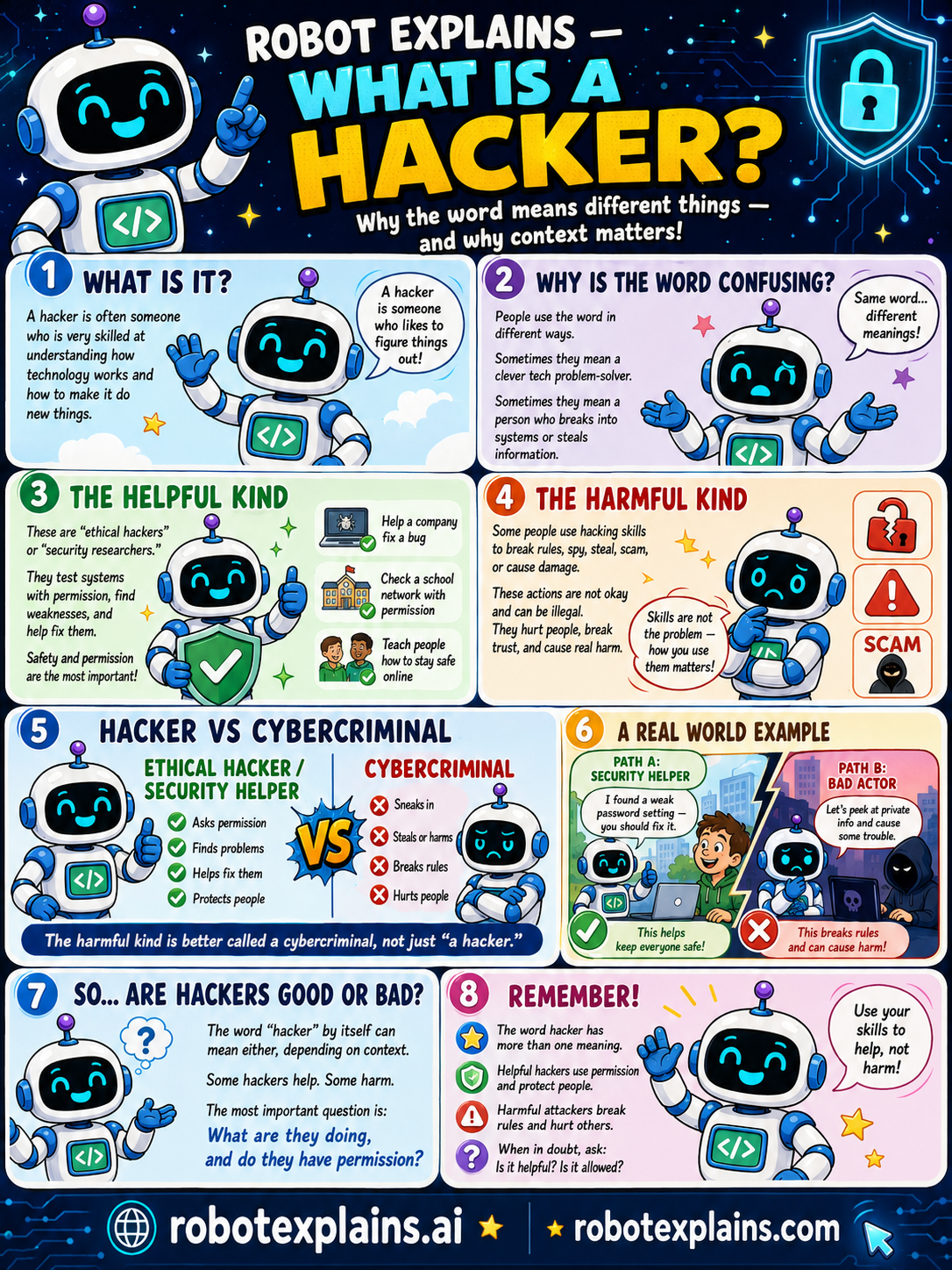
A hacker is often someone who is very skilled at understanding how technology works and how to make it do new things. At heart, a hacker is someone who likes to figure things out!
Why is the word confusing? People use it in different ways. Sometimes it means a clever problem-solver. Sometimes it means a person who breaks into systems or steals information. Same word, different meanings!
The helpful kind. These are "ethical hackers" or "security researchers." They test systems with permission, find weaknesses, and help fix them, like helping a company fix a bug, checking a school network with permission, or teaching people how to stay safe online. Safety and permission are the most important part.
The harmful kind. Some people use hacking skills to break rules, spy, steal, scam, or cause damage. These actions are not okay and can be illegal. They hurt people and break trust. The skills are not the problem, how you use them is what matters.
Hacker vs cybercriminal. An ethical hacker (a security helper) asks permission, finds problems, helps fix them, and protects people. A cybercriminal sneaks in, steals or harms, breaks rules, and hurts people. The harmful kind is better called a cybercriminal, not just "a hacker."
So, are hackers good or bad? The word by itself can mean either, depending on context. The most important questions are: what are they doing, and do they have permission?
Remember: the word "hacker" has more than one meaning, helpful hackers are protectors, harmful attackers break rules, and when in doubt, ask, "Is it helpful? Is it allowed?"
What to remember
- 'Hacker' has more than one meaning.
- Helpful hackers (with permission) protect people.
- Harmful attackers are better called cybercriminals.
- Ask: is it helpful, and is it allowed?
Words to know
- Hacker
- Someone skilled at understanding technology.
- Ethical hacker
- A helper who tests systems with permission.
- Cybercriminal
- Someone who attacks without permission.
- Permission
- Being allowed before testing a system.
For grown-ups
'Hacker' originally meant a skilled, curious technologist. Popular use conflates it with 'attacker,' but the meaningful distinction is intent and authorization: ethical hackers / security researchers test with permission to fix weaknesses, while cybercriminals act without permission to cause harm. Skills are neutral; authorization and intent define the line.
Want the full story? These go deeper: