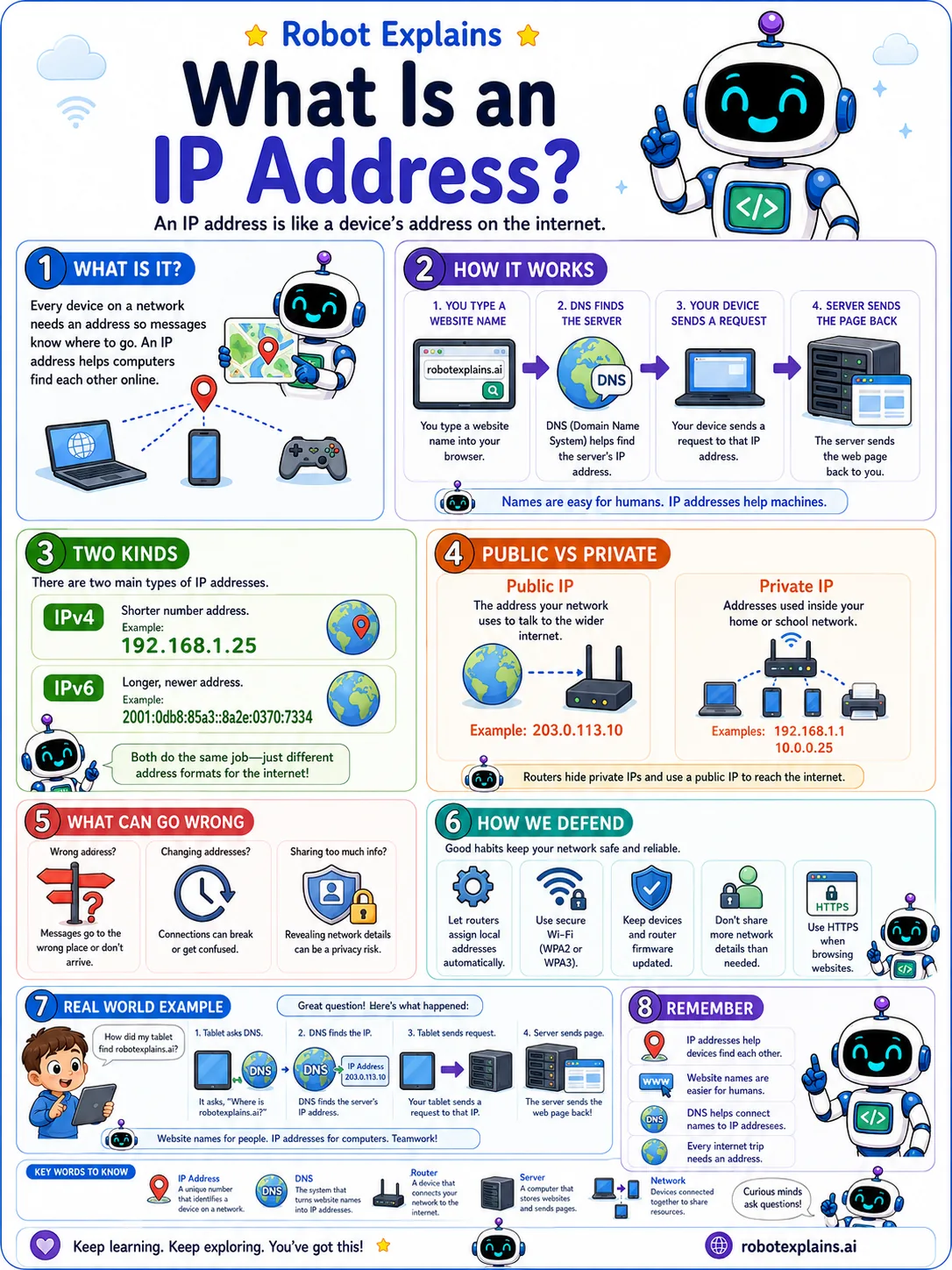
Computers do not really use names like robotexplains.ai. They use number addresses called IP addresses, like 203.0.113.25.
The trouble is, numbers are hard for people to remember. So we use easy names instead, and we need something to match the name to the number.
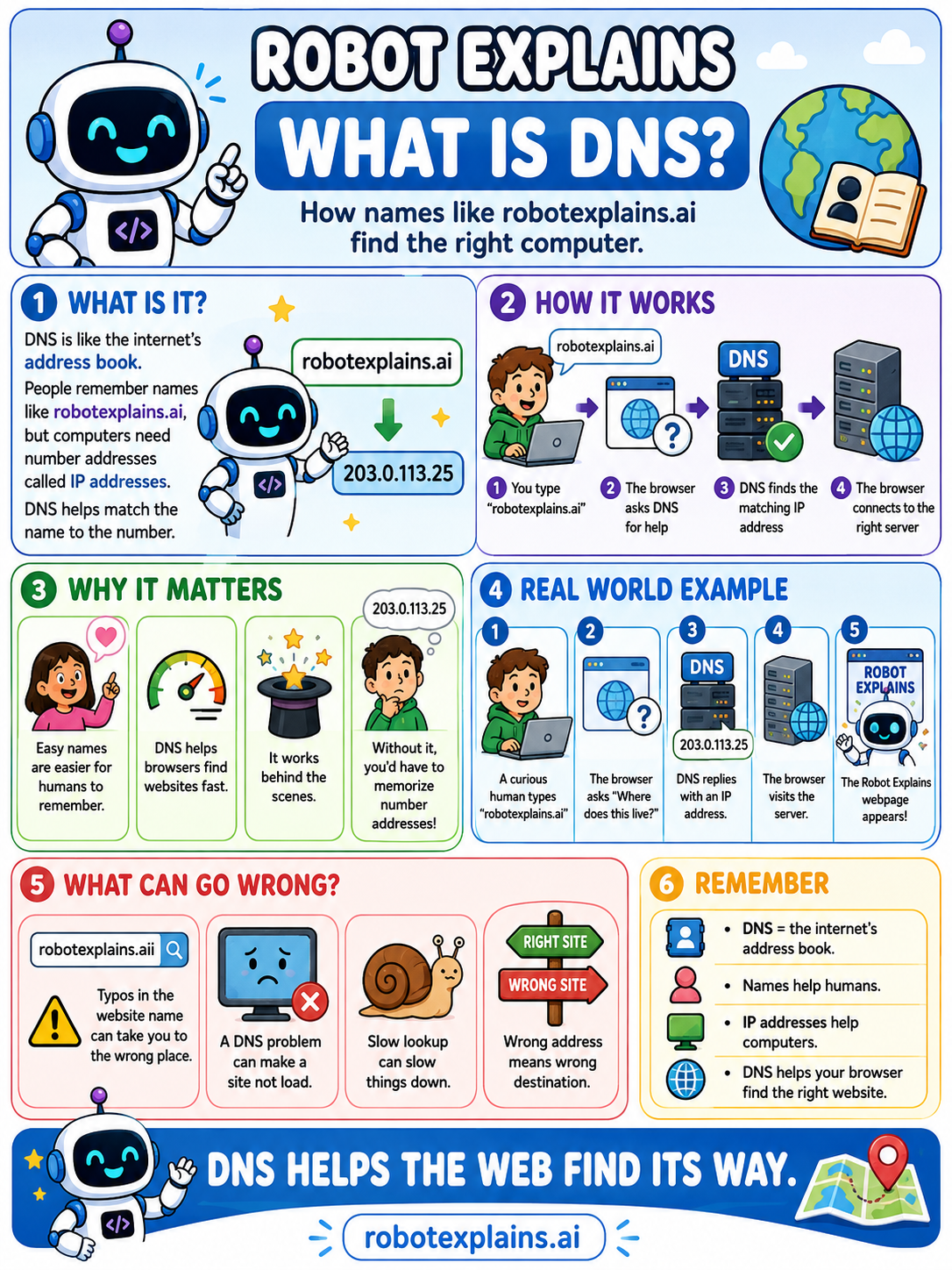
That something is DNS, the Domain Name System. Think of it as the internet's giant address book.
When you type a website name, your browser asks DNS, "What is the number address for this name?" DNS looks it up and sends the number back.
Now your browser knows the right number address, so it can connect to the correct computer and ask for the page.
All of this happens in a tiny fraction of a second, quietly, every single time you visit a website.
What to remember
- DNS is the internet's address book.
- Names are easy for humans; number addresses are for computers.
- DNS matches the name you type to the right number address.
- It works quietly behind the scenes every time you visit a site.
Words to know
- DNS
- Domain Name System. It matches website names to number addresses.
- Domain name
- The easy-to-remember name, like robotexplains.ai.
- IP address
- The number address that points to a computer, like 203.0.113.25.
- Lookup
- When DNS searches for the number address that matches a name.
For grown-ups
DNS resolves human-friendly domain names into IP addresses through a distributed, hierarchical system of name servers, with results cached along the way for speed. It is essentially the phone book of the internet, and because almost everything depends on it, it is also a meaningful security and privacy surface.
Want the full story? These go deeper: