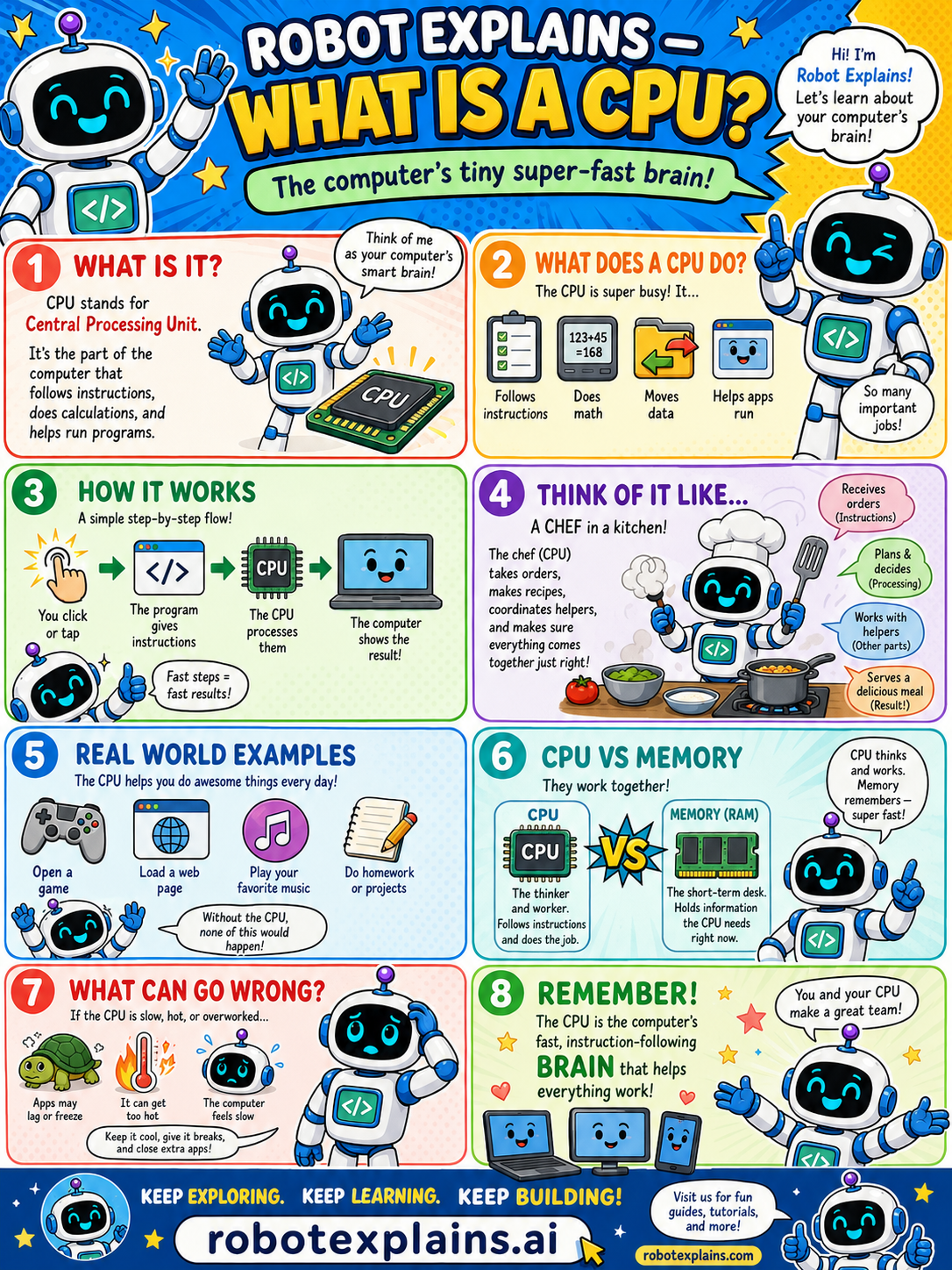
A CPU stands for Central Processing Unit. It's the part of the computer that follows instructions, does calculations, and helps run programs. Think of it as your computer's tiny, super-fast brain!
What does a CPU do? It's super busy: it follows instructions, does math, moves data, and helps apps work. So many important jobs!
How does it work? A simple step-by-step flow: you click or tap, the program gives instructions, the CPU processes them, and the computer shows the result, fast steps, fast results!
Think of it like a chef in a kitchen. The chef (CPU) takes orders (instructions), makes recipes (plans and decides), coordinates helpers (works with other parts), and makes everything come together just right (serves a delicious result).
Real-world examples: the CPU helps you open a game, load a web page, play your favorite music, and do homework or projects. Without the CPU, none of this would happen!
CPU vs memory: they work together! The CPU is the thinker and worker that follows instructions and does the job. Memory (RAM) is the short-term desk that holds information right now. CPU thinks and works; memory remembers, super fast!
What can go wrong? If the CPU is slow, hot, or overworked, apps may run slowly, it can get warm, and the computer can feel sluggish. The fix: keep it cool, give it breaks, and close extra apps.
Remember: the CPU is the computer's fast, instruction-following brain that helps everything work. You and your CPU make a great team!
What to remember
- The CPU is the computer's fast, instruction-following brain.
- It follows instructions, does math, and helps run apps.
- It works step by step, very, very fast.
- The CPU thinks; memory (RAM) remembers.
Words to know
- CPU
- Central Processing Unit, the computer's brain.
- Instruction
- A step the CPU is told to do.
- Process
- To work through instructions and data.
- RAM
- Fast memory the CPU works with.
For grown-ups
The CPU (central processing unit) executes program instructions, arithmetic, logic, and control, at very high speed, one core handling a stream of operations (modern CPUs have several cores). It works hand-in-hand with RAM (fast working memory) and is the primary engine that runs the operating system and apps.
Want the full story? These go deeper: