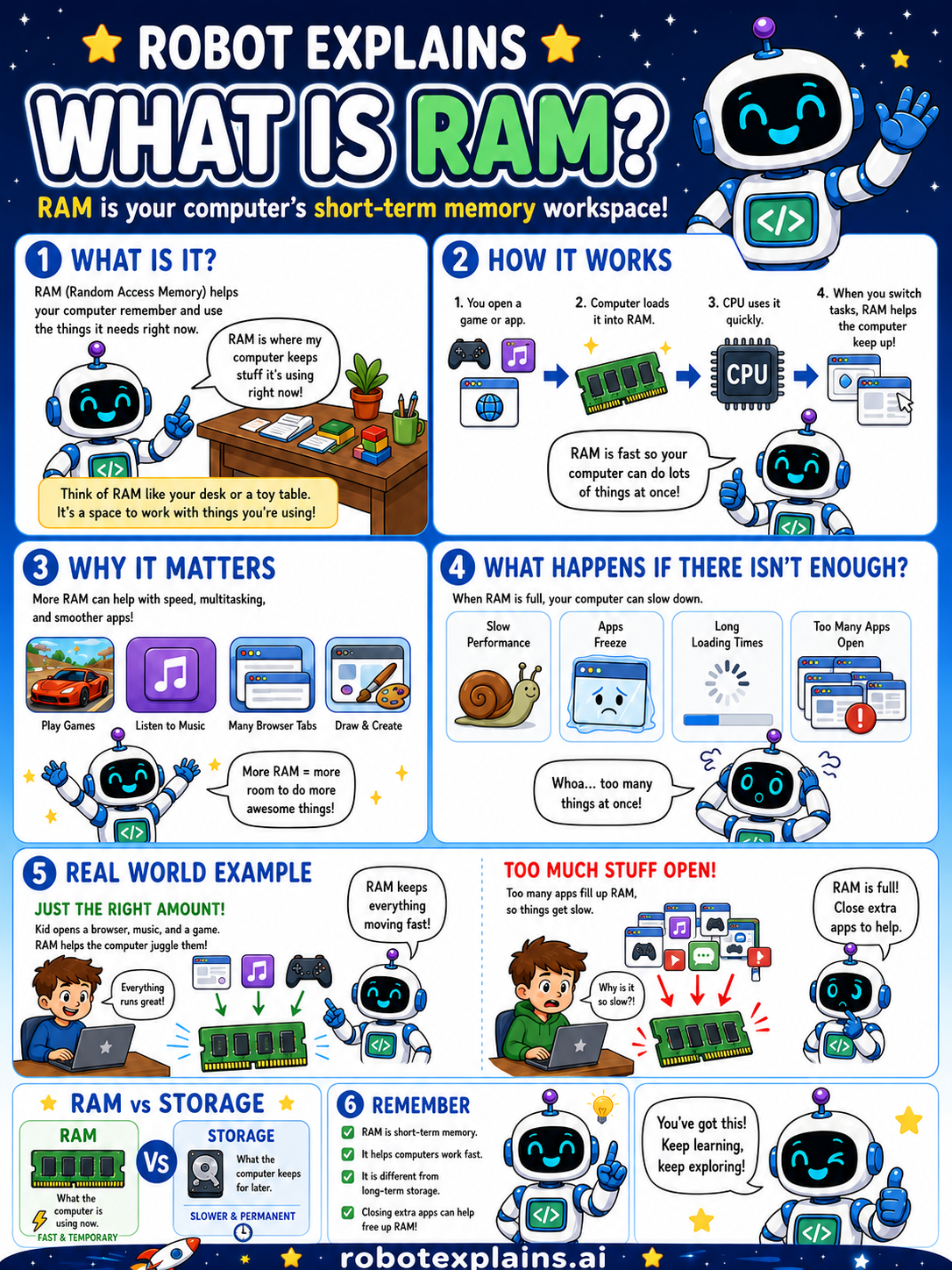
RAM (Random Access Memory) helps your computer remember and use the things it needs right now. RAM is where your computer keeps the stuff it's using at this moment.
Think of RAM like your desk or a tabletop, a space to work with the things you're using.
How does it work? You open a game or app, the computer loads it into RAM, the CPU uses it quickly, and when you switch tasks, RAM helps the computer keep up. RAM is fast, so your computer can do lots of things at once.
Why does it matter? More RAM can help with speed, multitasking, and smoother apps, playing games, listening to music, keeping many browser tabs open, and drawing or creating. More RAM means more room to do awesome things.
What happens if there isn't enough? When RAM is full, your computer can slow down, with slow performance, apps that freeze, long loading times, and trouble when too many tabs are open.
RAM vs Storage: RAM is what the computer is using right now (fast and temporary). Storage is what the computer keeps for later (slower and permanent).
Remember: RAM is short-term memory, it helps computers work fast, it's different from storage, and closing extra apps can free up RAM.
What to remember
- RAM is your computer's fast, short-term memory.
- It holds the apps and files you're using right now.
- More RAM helps with speed and multitasking.
- It's different from storage, and it clears when power is off.
Words to know
- RAM
- Random Access Memory: fast, short-term memory.
- Memory
- Where a computer keeps what it's using now.
- Multitasking
- Running several things at once.
- Storage
- Long-term space that keeps files for later.
For grown-ups
RAM (random-access memory) is fast, volatile working memory that holds the data and programs the CPU is actively using. More RAM lets more (or larger) apps run smoothly at once. It's temporary, cleared at power-off, unlike storage (disk or SSD), which is slower but persistent.
Want the full story? These go deeper: