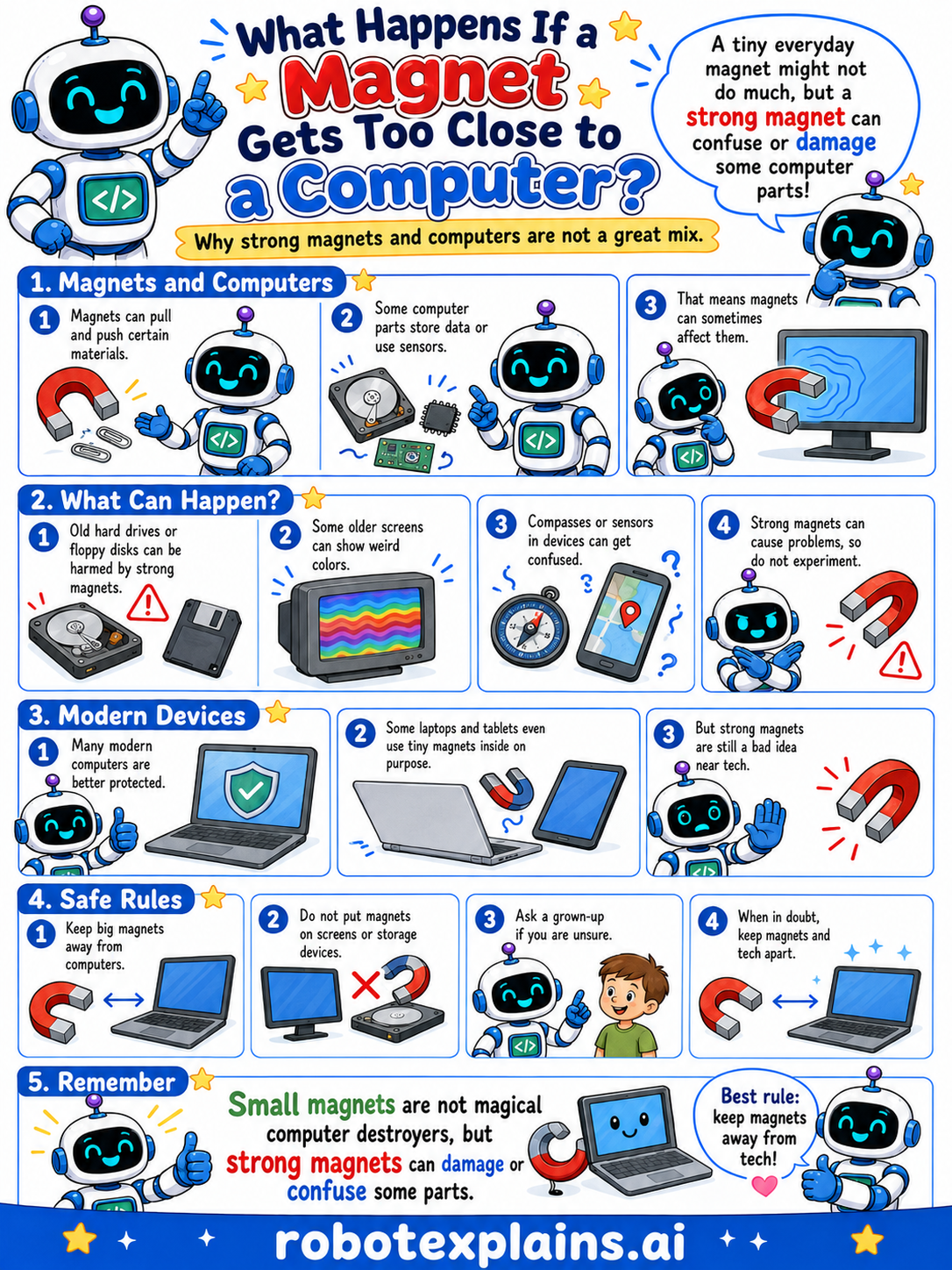
A tiny everyday magnet might not do much, but a strong magnet can confuse or damage some computer parts.
Magnets and computers. Magnets can pull and push certain materials. Some computer parts store data or use sensors, which means magnets can sometimes affect them.
What can happen? Old hard drives or floppy disks can be harmed by strong magnets. Some older screens can show weird colors. Compasses or sensors in devices can get confused. Strong magnets can cause problems, so it's not something to experiment with.
Modern devices. Many newer computers are better protected. Some laptops and tablets even use tiny magnets on purpose. But strong magnets are still a bad idea near technology.
Safe rules. Keep big magnets away from computers. Don't put magnets on screens or storage devices. Ask a grown-up if you're unsure. When in doubt, keep magnets and tech apart.
Remember: small magnets are not magical computer destroyers, but strong magnets can damage or confuse some parts. Best rule: keep strong magnets away from tech!
What to remember
- A small everyday magnet usually won't do much.
- A strong magnet can confuse or damage some parts.
- Older hard drives and screens are the most at risk.
- When in doubt, keep strong magnets away from tech.
Words to know
- Magnet
- An object that can pull on certain metals and parts.
- Hard drive
- An older part that stores data and can be magnet-sensitive.
- Sensor
- A device part that can get confused by magnets.
- Data
- The information stored on a computer.
For grown-ups
Magnetism interacts with electronics in specific ways. Strong fields can corrupt data on legacy magnetic media (spinning hard drives, floppy disks) and distort old CRT displays; compasses and some sensors can be misled. Modern SSDs, phones, and laptops are far more resistant, and some even use small magnets on purpose (lids, accessories). The balanced message for kids: everyday fridge magnets are fine, but strong magnets and sensitive tech don't mix — when unsure, keep them apart.
Want the full story? These go deeper: